WAYLAND — For everyone old enough to remember Sept. 11, 2001, what started out as a perfectly normal day turned out to be harrowing. We can remember exactly where we were when we heard the news of the planes hitting the Twin Towers. As we commemorate the 20th anniversary of the largest attack on American soil, one local EMT shares his story of being in New York City on that day.
Fred Grambs, chief for Springwater-Wayland EMS, was a captain for Lindenwood Volunteer Ambulance Corps in Queens. He recalls arriving comfortably at work, and then, when the second plane hit, his boss immediately relieved him for duty with the ambulance service.
“I called the base to find out where our ambulances were, and couldn’t get through. I knew we had one crew on, we had two ambulances, so I sat back and being an officer, I had to think about what to do,” he remembered…
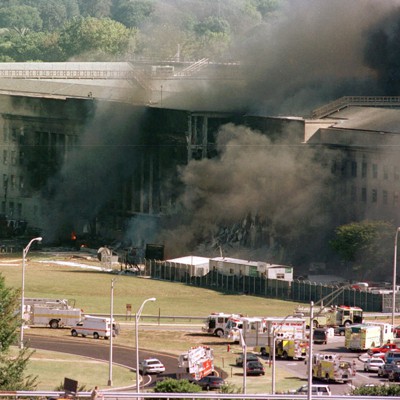
When terrorists crashed a plane into the Pentagon on Sept. 11, 2001, it wasn’t a branch of the military that oversaw the massive emergency response operation—the lead agency was the 266-person Arlington County Fire Department in Virginia.
The emergency response at the Pentagon that day was largely considered a success, by the 9/11 Commission, due in part to the high level of regional cooperation among local, state and federal agencies that enabled first responders to quickly stand up an incident command system.
Twenty years later, emergency preparedness experts say the incorporation of regional training and communications into emergency planning is one of the most important takeaways for local governments from the deadly terrorist attacks…
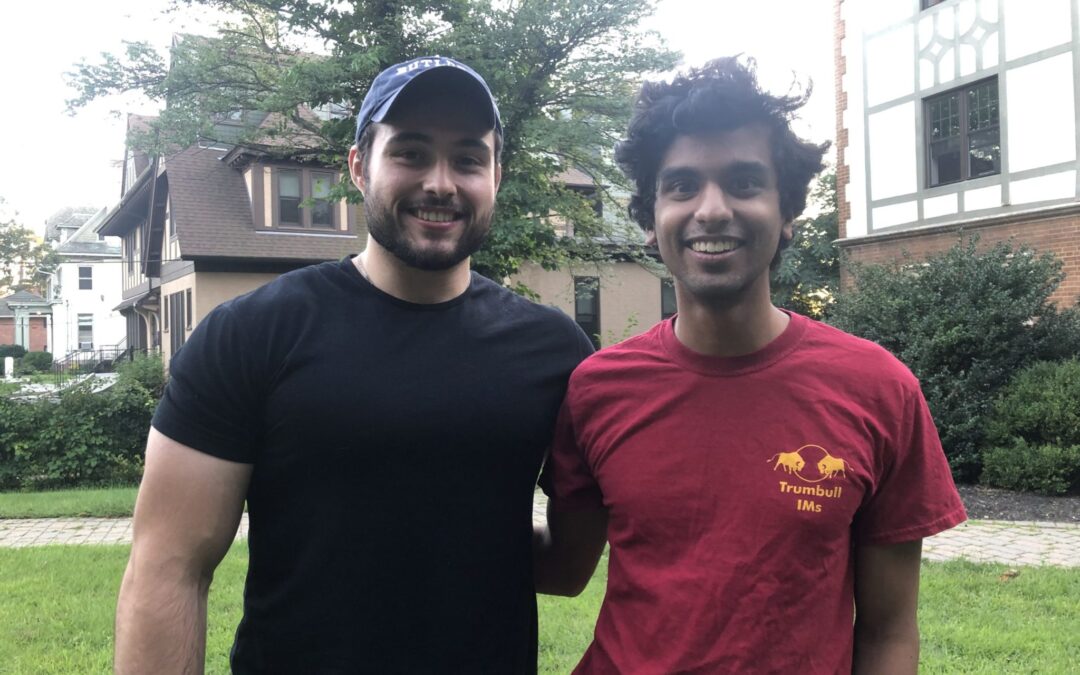
Former Yale student Michael Chime, along with co-founders Neal Soni ’24 and Dylan Gleicher ’23, has launched an app that aims to change how schools and 911 centers across the country address emergencies.
The Prepared app allows teachers, students, school administrators and security officers to quickly report and share information during medical and security emergencies. Each teacher or administrator in a participating school downloads the Prepared app and receives training on how to use it, so they can notify each other when emergencies arise. The idea is to replace traditional school communication systems — such as walkie-talkies and PA systems — with a streamlined cell phone app…
The attacks on 9/11 were collectively the deadliest terrorist attack in history. For New York City, it was also the deadliest disaster in history (discounting pandemics like coronavirus, Spanish Flu, AIDS and cholera epidemics). The emergency phone number, 911, was flooded during 9/11 and on the 20th anniversary of the World Trade Center attacks, we take a look at when 911 was started in New York and in the United States. In fact, one of the early incidents that is said to have pushed forward the concept of a centralized emergency number took place in New York City: the horrific murder of Kitty Genovese. In reality, the history goes back much further.
Back in the Victorian era before telephones were invented, fire and police call boxes were installed on the streets of New York City — an urban ephemera that still exists today in more modern forms. Before 1968, there was no centralized or unified emergency phone number in the United States, but a call for one had been growing for the last decades…
As part of the N.C. Department of Public Safety’s Division of Emergency Management, the 24-Hour Watch is housed in the State Emergency Operations Center in Raleigh. The Watch is an information and communication sharing hub for incident information and intelligence data from federal, state and local partners. The Watch shares information it receives with all necessary stakeholders via multiple communication platforms.
“The 24-Hour Watch aims to be the eyes and ears of North Carolina Emergency Management, with complete situational awareness of all goings-on across the state,” said Amanda Winans, 24-Hour Watch Manager and State TERT Coordinator. “All information that comes into the Watch is pushed out in some way or another; our goal is that information never stops with us.” … READ MORE
Learn about current efforts to continue to protect the 4.9 GHz Band for public safety as well as recent filings, key decisions impacting these efforts, and how you can support PSSA’s initiative to protect the 4.9 GHz band for public safety.