by AllThingsECC.com | Sep 15, 2021 | Articles, Comm Center News
Following the Sept. 11, 2001, attacks, federal and state governments invested billions of dollars on preparedness efforts within the first responder community to respond to weapons of mass destruction (WMD) events. As time passed, there was greater realization that WMD incidents were less of a threat than conventional firearms and explosives. The intricate, often unrealistic, CBRN scenarios were replaced with more representative and realistic examples of attacks on the civilian populace utilizing readily available materials and weapons. These attacks were occurring overseas in countries with internal or external conflicts and in the Afghanistan and Iraq war theaters.
These events, commonly utilizing a variety of violent modalities, came to be categorized as complex coordinated terrorist attacks (CCTA) – a bit of a misnomer, as these events, at least domestically, are not always coordinated and not always committed by “terrorists”. CCTA has an excellent ‘ring’ to it, but exactly how can jurisdictions, agencies and communities really prepare for this general, nondescript threat? The term CCTA is just too broad and open-ended; a better descriptor for the various threats we face is the term “high threat”…
by AllThingsECC.com | Sep 15, 2021 | Comm Center News
The Kentucky State Police Post 1 communications center was recognized as the 2021 Public Safety Answering Point of the year for the state of Kentucky.
The 911 center at Post 1 in Hickory serves as the PSAP for agencies in Ballard, Graves, Hickman, and Lyon Counties. Aside from dispatching for the Kentucky State Police, Post 1 is the primary dispatch center for all emergency services in Graves and Lyon Counties including their police departments. In 2020 the 911 center in Hickory answered nearly 26,000 9-1-1 calls and 75,000 non-emergency calls in addition to dispatching and receiving hundreds of thousands of radio transmissions.
The dispatch center at Post 1 served as the redundancy for other dispatch centers and emergency services when the Christmas Day 2020 bombing in downtown Nashville knocked out telecommunication services to a large portion of the southeast and most of Kentucky…

by AllThingsECC.com | Sep 15, 2021 | Comm Center News
KYLE, TEXAS – The community is invited to join the City of Kyle for the Public Safety Center Groundbreaking on Friday, Sept. 17, from 10 to 11:30 a.m. at the corner of Kohlers Crossing and Marketplace Avenue (1760 Kohlers Crossing).
The groundbreaking event will provide community members an opportunity to learn more about the features of the Public Safety Center, a facility that will be dedicated to serving the public safety needs of Kyle.
This $37 million project will grant room for the Kyle Police Department to grow over the next 20 years and beyond…
by ECC Editor | Sep 15, 2021 | Articles, Comm Center News
House Republicans tried unsuccessfully on Monday to penalize communities that reduce police funding by taking away money in President Joe Biden’s proposed $3.5 trillion Build Back Better investment package intended for upgrading local 911 services.
They then claimed that by opposing the proposed amendment, Democrats were refusing to support law enforcement.
The attempt came during a markup of the Energy and Commerce Committee’s portion of the investment package. The legislation includes $10 billion, to be spent over five years, for community grants to implement, operate, and maintain the Next Generation 911 system… READ MORE
by AllThingsECC.com | Sep 15, 2021 | Comm Center News
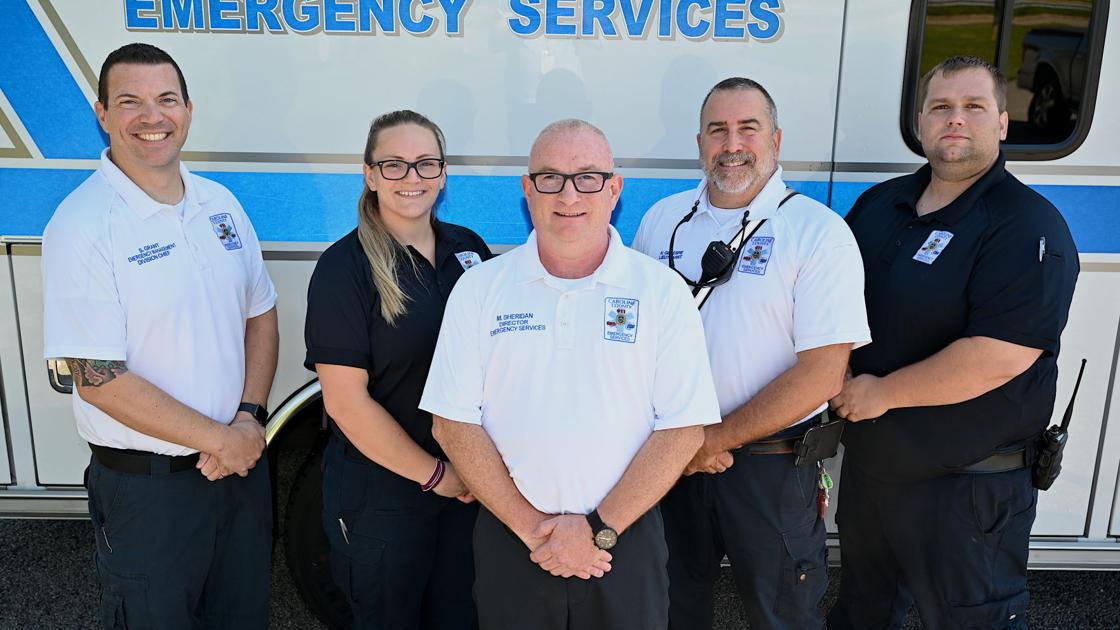
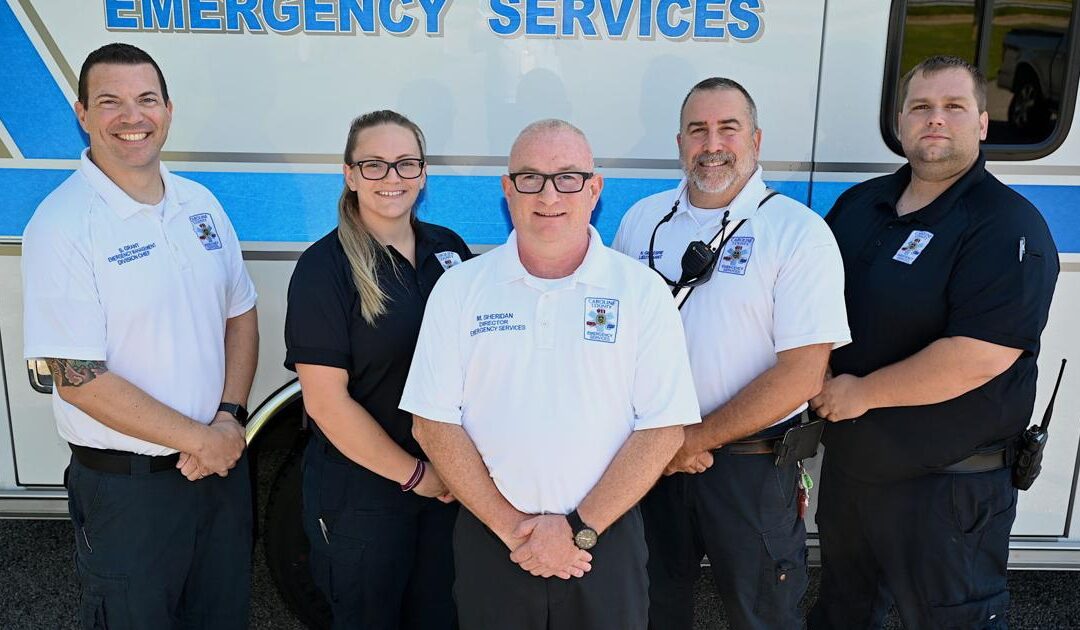
DENTON — Mark Sheridan is the new director of Emergency Services for Caroline County. This vital job responds to roughly 7,000 calls a year. His journey began in 1986 as volunteer in Laurel, Del.
He graduated from paramedic school in 1992 and started his career with Sussex County. He received the Valor Award in 2005 for saving three teenagers from a burning car at an automobile accident while he was off duty. He has worked for 27 years at Sussex County EMS. He has worked his way through the ranks from deputy fire chief, assistant fire chief and fire chief with Laurel Fire Department.
He has remained committed to his studies even while working. He holds a bachelor’s degree in Fire Protection Management from Eastern Kentucky University. He has a master’s in Safety, Security and Emergency Management from Eastern Kentucky University…
by AllThingsECC.com | Sep 15, 2021 | Comm Center News
A communications upgrade for Eddy County Fire and Rescue (ECFR) from the State of New Mexico allowed greater and extended emergency radio coverage across the county and state, said Chief Joshua Mack.
The Eddy County Board of County Commissioner’s approved a $6.9 million agreement between the County and the New Mexico Department of Information Technology (DoIT) Sept. 7 to join the Statewide Digital Trunked Radio (DTRS).
Renee Narvaiz, DoIT spokesperson said DTRS is a consolidated state-wide public safety radio communications system, hosted by DoIT and its partners that is currently being deployed.
“DTRS is a $170 Million project being funded thus far by capital appropriation. Thirty-nine million dollars has been appropriated for the project since fiscal year 2019 and the project is planned for completion in 2027. It exists to provide high quality, high coverage interoperable radio communications to state and participating local, federal, and tribal agencies,” she said…