by AllThingsECC.com | Aug 27, 2021 | Articles, Comm Center News
Those responsible for managing their organization’s E911 strategy face the following new challenges:
- The shift to remote and hybrid work means that employees are largely no longer working from a fixed location.
- The increase in the adoption of softphones changes the way individuals make calls, potentially creating more difficulty in reaching a 911 operator, especially for home-based employees.
- Employees are more reliant on their mobile devices for making phone calls than ever before.
- On-premises PBXs are rapidly going away as organizations increase their use of UCaaS.
- UCaaS, coupled with bring-your-own-carrier for PSTN connectivity, adds additional management complexity in ensuring 911 call routing and location management…
by ECC Editor | Aug 26, 2021 | Articles, Comm Center News
The Arkansas 911 Board has selected AT&T to implement its “Next Generation 9-1-1 service” to improve emergency communications across the state.
The state’s 114 public safety answering points (PSAPs) handle more than 1.6 million 9-1-1 calls each year. Terms of the contract were not disclosed.
Some aspects of the new service include:
- Improved location-based services. Using location-based geospatial routing, when a person contacts 9-1-1, their location can be identified quickly and routed to the appropriate PSAP for improved response times… READ MORE
by AllThingsECC.com | Aug 26, 2021 | Articles, Comm Center News
Introduction
The imminent release of Motorola’s 3GPP-compliant (sans ProSe) Push-To-Talk (PTT) will be the second 3GPP-compliant PTT application available on FirstNet (Built with AT&T). With seven other PTT applications already approved for the network, I am concerned about how we progress from today where we have a variety of flavors of PTT to where we need to be with fully-interoperable push-to-talk for FirstNet and integration with multiple forms of Land Mobile Radio systems (LMR).
Last week, I wrote about the FirstNet Authority’s request for information concerning off-network communications. Response to that article was greater than to any I have written in the past three to four months. Most of the comments were positive and many brought up some of the same issues I wrote about…
by AllThingsECC.com | Aug 25, 2021 | Articles, Comm Center News
Polaris Wireless announced that its vertical-location (Z-axis) information can be delivered to carriers for 911 purposes by users of non-iOS and non-Android phones through a collaboration with Qualcomm—a deal that is expected to make the first end-to-end 911 solution with Z-axis location commercially available early next year.
Polaris Wireless CEO and founder Manlio Allegra noted that the company’s vertical-location technology bettered the FCC’s vertical-location accuracy requirements in tests conducted in 2016 and 2018, but the collaboration with Qualcomm on a control-plane solution promises to make it available broadly…
by AllThingsECC.com | Aug 25, 2021 | Articles, Comm Center News
Fire Chief Marc Bashoor speaks with Division Chief Martha Ellis, executive director for the Public Safety Broadband Technology Association. Chief Ellis unpacks all things fireground communications, interoperability and FirstNet. She details the mission of the PSBTA and how FirstNet is currently serving the fire service. Contact Ellis here.
To hear this episode of the Side Alpha Podcast, CLICK HERE
by AllThingsECC.com | Aug 24, 2021 | Articles, Comm Center News
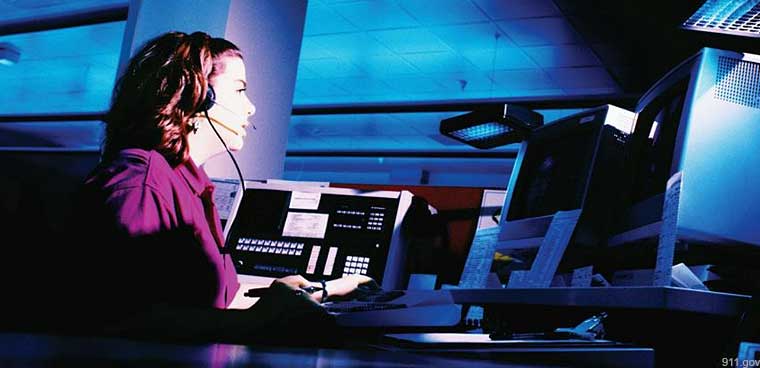
Cloud-native incident management streamlines emergency response
- By Stephanie Kanowitz
- Aug 24, 2021
A new cloud-native software suite links data and workflows from an initial 911 call all the way through the criminal justice system.
Motorola Solutions’ CommandCentral suite provides a complete incident view, including 911 call handling, dispatch, video analytics, field reports, records, evidence and community engagement. The automatic collection and correlation of incident data from every source — including bystanders’ smartphones, officers’ body-worn cameras, fixed video, 911 calls and radio logs — enhances collaboration and the building of case files…