by ECC Editor | Feb 28, 2022 | Articles, Comm Center News
FCC Chairwoman Jessica Rosenworcel this week proposed that future auction proceeds be used to fund the technological migration of U.S. public-safety answering points (PSAPs) from legacy systems to IP-based next-generation 911 (NG911) platforms.
Rosenworcel unveiled her idea during an event organized in Washington, D.C.—organized by the Public Safety Broadband Technology Association—celebrating the 10th anniversary of the FirstNet Authority being created to build a nationwide public-safety broadband network (NPSBN). A key player in the push for FirstNet while serving as counsel to the Senate Commerce Committee a decade ago, Rosenworcel cited numerous parallels between the FirstNet initiative and the NG911 transition… READ MORE
by ECC Editor | Feb 25, 2022 | Articles, Comm Center News
February 23, 2022 – Following the recent announcements concerning spectrum from the Federal Communication Commission, agency chairwoman Jessica Rosenworcel revealed Tuesday a proposal to use proceeds from upcoming spectrum auctions to update the national 9-1-1 system, according to an FCC press release.
The next generation 9-1-1 system allows callers to send emergency responders photos, videos and text messages, instead of just calls. For example, these upgrades would include sharing pictures and videos of the emergency during the emergency and sharing medical records instantaneously… READ MORE
by ECC Editor | Feb 24, 2022 | Articles, Comm Center News
Nine organizations on Wednesday announced the launch of Airwaves for Equity, a coalition focused on asking Congress to dedicate the net proceeds from future spectrum auctions to support digital literacy and inclusion efforts.
Under the Airwaves for Equity proposal, Congress would dedicate a “substantial portion” of wireless spectrum auction revenues to endow the foundation. The most recent FCC auction, of 3.45 GHz airwaves, raised more than $21.8 billion, and the one before that, the C-band 3.7 GHz auction, raised over $81 billion… READ MORE
by AllThingsECC.com | Feb 24, 2022 | Articles, Comm Center News
By Edward Parkinson, CEO, First Responder Network Authority (FirstNet Authority)
Broadband has become the lifeblood of our economy. It is also essential to our national security and public safety, a fact that first responders recognized many years ago. The tragedies of September 11th revealed fundamental problems with the communication systems used by our nation’s first responders. They needed a more advanced telecommunications infrastructure for their lifesaving mission, a reliable one to help them communicate and share information during emergencies and daily operations.
In the years following the terrorist attacks, public safety from across all disciplines, including 9-1-1, EMS, fire service and law enforcement, joined together to advocate for their own high-speed broadband network. In 2012, Congress enacted a law to create the First Responder Network Authority within the Department of Commerce to ensure the building, deployment and operation of FirstNet, America’s only nationwide public safety broadband network.
READ FULL ARTICLE
by AllThingsECC.com | Feb 23, 2022 | Articles, Comm Center News
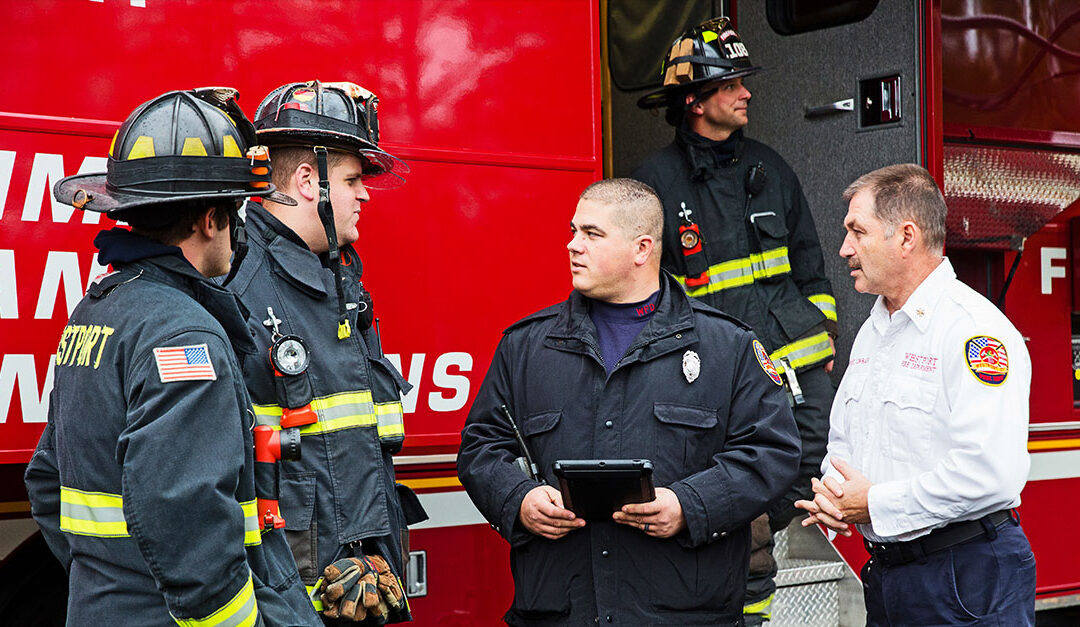
How does FirstNet help bridge the digital divide? Over the past 5 years (2017–2021), AT&T’s total investment in the United States, including capital investment and acquisitions of wireless spectrum, was more than $130 billion. And the FirstNet network expansion is one way we are helping ensure all of public safety – and the communities they serve – have access to critical connectivity to help meet the urgent challenges of today and tomorrow.
We already cover more than 99% of the U.S. population today, but FirstNet is built for all public safety. That means every first responder – career or volunteer; federal, tribal, state or local; urban, suburban or rural, and those that support them…
by ECC Editor | Feb 23, 2022 | Articles, Comm Center News
The First Responder Network Authority (FirstNet) is responsible for establishing a nationwide public-safety broadband network. GAO identified four key statutory requirements and contract responsibilities currently performed by FirstNet that the Congress should address before FirstNet would sunset in 2027. For example, FirstNet oversees the network contract awarded to AT&T in 2017 (see figure). The current statute does not identify another federal entity to assume oversight when FirstNet sunsets. Without any legislative action, network operations and improvements would be at risk and could result in the loss of service for public-safety users. Another example is FirstNet’s responsibility to collect fees and to reinvest these funds to enhance the network. FirstNet expects to collect and reinvest $18 billion in fees from AT&T over the 25-year duration of the contract with AT&T… READ MORE