by ECC Editor | Apr 8, 2022 | Articles, Comm Center News
A decade ago, the First Responder Network Authority (FirstNet) was authorized under the Middle Class Tax Relief and Job Creation Act of 2012 as an interoperable broadband network designed exclusively around the needs of public safety organizations. It was conceptualized in the wake of the Sept. 11, 2001 World Trade Center attacks, which laid bare communication shortcomings.
At first, given the massive scope of the undertaking, its completion wasn’t certain. Today, however, with upwards of 95 percent of the network completed ahead of schedule, city and county organizations are signing on… READ MORE
by AllThingsECC.com | Apr 7, 2022 | Articles, Comm Center News
I am disappointed that I cannot find the archived article I wrote a number of years ago and published on April Fool’s Day. I had described how I was at a restaurant in Silicon Valley and at the table next to me were some Microsoft and FCC executives. I reported that they were discussing how Microsoft could buy the Federal Communications Commission (FCC) and have access to all the spectrum the FCC controlled. The article went into detail and some readers fell for it. This year I will be sticking to facts and truth!
More IWCE 2022
As I said last week, it was great to be able to attend IWCE again. Yes, the number of attendees and exhibitors were down from pre-Covid years but I am confident that next year, unless there is yet another outbreak of the virus, IWCE should be back where it was a few years and perhaps larger…

by AllThingsECC.com | Apr 5, 2022 | Articles, Comm Center News
Today, the Cybersecurity and Infrastructure Security Agency (CISA) kicks off its inaugural Emergency Communications Month. Through its emergency communications mission, CISA supports and promotes the ability of emergency response providers across the nation to communicate in the event of a natural disaster, terrorist act, or other hazard. CISA also provides various resources and guidance for stakeholders to establish emergency communications infrastructure and protocols…
by ECC Editor | Apr 5, 2022 | Articles, Comm Center News
Gordon Graham here with Today’s Tip from Lexipol. Today’s Tip is for all my friends in public safety. I want to talk about the vital role our telecommunicators play in keeping the community and all first responders safe during our shifts.
Every day across the country, thousands and thousands of people seek immediate assistance in times of crisis by doing what? Calling 9-1-1. Our first responders also rely on telecommunicators to answer their radio calls and provide various types of assistance. These telecommunicators are real people, just like you and me, providing a calm voice on the other end of the telephone or radio every hour of the day. They are behind the scenes and truly make a difference. Every successful emergency response begins with an emergency call for service. A well-trained telecommunicator can gather vital information that helps first responders understand what they may be facing before getting on the scene… READ MORE
by AllThingsECC.com | Apr 1, 2022 | Articles, Comm Center News
The IWCE made a triumphant return with IWCE 2022! Some may say it was smaller than earlier IWCEs or perhaps the show floor did not have as many vendors, but smaller or fewer vendors is not what matters. What does matter is that overall, the show was a great success.
Sessions
Sessions I attended and the four I participated in were well presented and well received. Some sessions had more attendees than others, but that is partly because many sessions were held concurrently. If you missed one or more you wanted to attend, I am told that by the time you receive this Advocate they should be up and available on the IWCE website…
by AllThingsECC.com | Mar 30, 2022 | Articles, Comm Center News
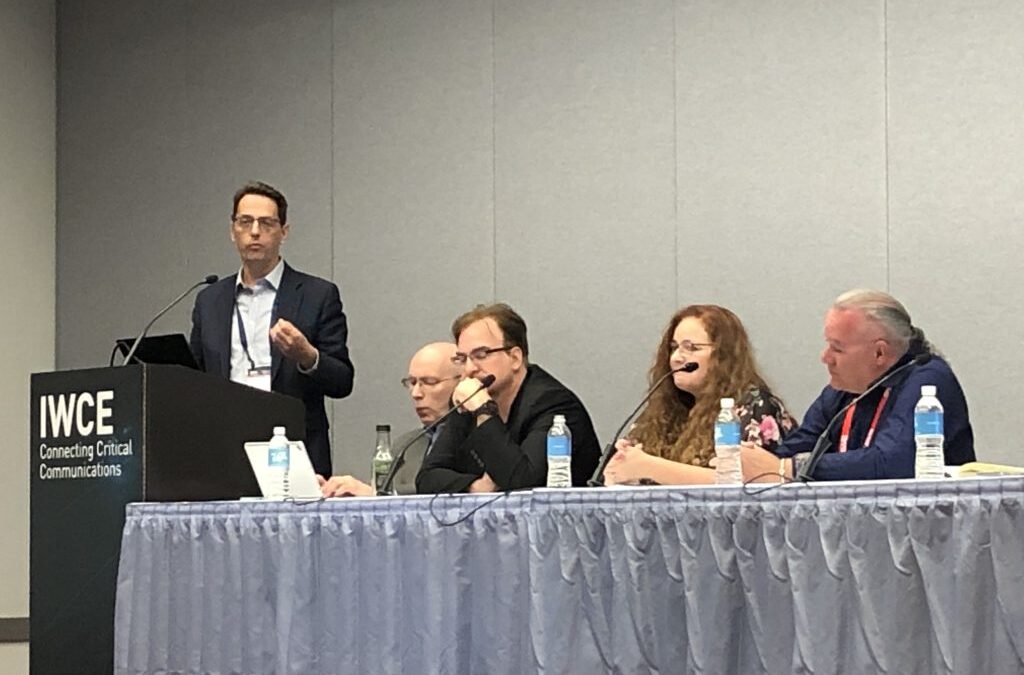
Public-safety aerial drone initiatives provide an ever-growing level of situational awareness to first responders, but many of these programs could be undermined by rules designed to ban the use of drones from China-based DJI because of national-security concerns, according to panelists speaking at IWCE 2022.
Tony Loperfido, a sergeant with the technical operations unit of the Miami Beach Police Department, said that the Florida Department of Management Services (DMS) has directed public-safety agencies to only buy drones from five American manufacturers—not from DJI, which dominates the U.S. drone market today…