by ECC Editor | Jul 24, 2020 | Articles, Comm Center News
Imagine being able to text 911 when you need help or sending a video to 911 that shows how a car accident happened. Both would be possible with Next Generation 911 (NG911). Today, most of the 911 systems in use were built using analog systems rather than digital technology. These analog systems use copper-based wire and do not allow all types of data to be transmitted. Public Safety Answering Points, more commonly known as 911 call centers, would need to be upgraded to digital or Internet (IP) based 911 systems to allow more types of data to be transmitted and make other improvements… READ MORE
by AllThingsECC.com | Jul 24, 2020 | Articles, Comm Center News
First Responder FirstNet Authority July 23, 2020
As the summer months heat up, so too does hurricane season. With the U.S. Department of Commerce’s National Oceanic and Atmospheric Administration (NOAA) forecasting an above-normal Atlantic hurricane season for 2020, first responders must be prepared. FirstNet, the only nationwide, purpose-built network for public safety, has been battle tested and designed to keep first responders connected during large storms and hurricanes. READ MORE
by AllThingsECC.com | Jul 23, 2020 | Articles, Comm Center News
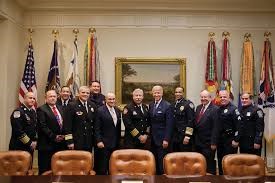
While continuing research for my book on FirstNet, I happened across an Advocate published on July 26, 2010 entitled, “Mr. Seybold Goes to Washington.” I believe this column is a good recap of the activities the Public Safety Alliance (PSA), APCO, and others were engaged in and the politics they were up against. With the D-Block, another 10 MHZ of spectrum would be added to the 10 MHz then licensed to the Public Safety Spectrum Trust (PSST), bringing the total public-safety broadband spectrum to 20 MHz, which was what we believed we needed to ensure public safety would have sufficient broadband spectrum to operate nationwide. At the time, we thought our activity toward the end of July, 2010 boded well for winning the D-Block spectrum and establishment of a Nationwide Public-Safety Broadband Network (NPSBN)…
by AllThingsECC.com | Jul 22, 2020 | Articles, Comm Center News
In this article, we will discuss the transition from land mobile radios to FirstNet and explain the advantages and disadvantages of each network.
Public safety identified a need for a better communication network after the attacks on September 11, 2001, when first responder’s radio systems could not easily operate across police, fire, and paramedics. During 9/11, land and mobile power lines received a high volume of calls, making it difficult to communicate. For over 11 years, public safety advocates created the 9/11 Commission Report and pushed Congress to act and pass legislation for the dedicated network. Congress ultimately created the First Responder Network Authority (FirstNet) in 2012.
This article appears on telecomdrive.com dated July 22, 2020.
CLICK HERE TO READ FULL ARTICLE
by AllThingsECC.com | Jul 20, 2020 | Articles, Opinions
The concept of “professionalism” was Grogan’s segue into changing the classification system for emergency dispatchers. He started “hearing rumblings” about circumventing a protracted timeline for again attempting to upgrade their status from administrative assistants.
“Emergency dispatchers are highly trained individuals handling critical situations,” Grogan said. “We literally breathe life into people by what we do.”
by AllThingsECC.com | Jul 16, 2020 | Articles, Comm Center News
Last week, the FCC issued Notice of Proposed Rulemaking (NPRM) PS Docket No. 13-42 to implement Section 6103 of the Middle Class Tax Relief and Job Creation Act of 2012 that established FirstNet. Section 6103 is the requirement for the return for auction of the T-Band spectrum, which has been used by eleven major-metro-area public-safety agencies since 1970. I believe the FCC was reluctant to release this NPRM even though Congress has been under constant pressure for the last three years to proceed with the repeal. However, since Congress has failed to pass the simplest of bills to repeal the giveback, the FCC is left with no other choice…