by AllThingsECC.com | Aug 2, 2018 | Articles, Comm Center News
By First Responder Network Authority
Whether securing large events or responding to local emergencies, it can be a challenge for public safety to keep track of where first responders are positioned. Historically, tracking first responders in the field meant repeated radio roll-calls where units identify with their call sign and location and incident scribes map the scene on a white board – a labor-intensive process that didn’t provide the up-to-the-minute situational awareness incident commanders need for optimal decision-making.
Some agencies have improved the tracking process by attaching GPS tracking sensors to emergency vehicles, enabling dispatch to track a unit’s location and send the closest unit available. Still, once responders leave their vehicles, they become disconnected and their location unknown.
FirstNet, public safety’s dedicated, nationwide broadband network, is opening the door to life-changing mobile technology never before available to public safety in the field. With location services, FirstNet is helping to address the “where-are-they-and-where-do-they-need-to-be” decisions that incident commanders regularly face. The network is built to carry high-speed data, including images and video, and allows public safety to pinpoint location – helping first responders and incident commanders get better situational awareness and work toward better outcomes.
READ FULL ARTICLE
by AllThingsECC.com | Jul 30, 2018 | Articles, Comm Center News
Before, after or in between APCO International’s Annual Conference & Expo, Las Vegas has plenty to offer visitors
By Alex Snyder
Originally published in the July/August 2018 issue of APCO’s PSC magazine.
For access to PSC magazine and more articles like this one, please log in or become an APCO member.
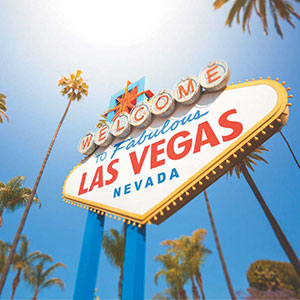 Welcome to fabulous Las Vegas! This is the sign that conference attendees will read as they are welcomed into the city. While in Las Vegas, you will find yourself busy with conference meetings, vendor booths and professional development and continuing education classes. A few may have the time to explore the city. Some may combine business with pleasure and come earlier or stay later after the conference. Here’s your introduction to fabulous Las Vegas.
HISTORY
Las Vegas, which means the meadows in Spanish, was aptly named because of its lush valley filled with fields of wild grasses nourished by an underground aquifer in the middle of the Mojave Desert. The city was founded in 1906 and incorporated in 1911. In 1931, the first gaming license was issued. The year 1931 also saw the beginning of construction on the Hoover Dam. This brought in a population boom with construction workers and a boost to the economy. The Las Vegas Army Air Field, now known as Nellis Air Force Base, found its home in Las Vegas in 1941. The city has enjoyed many nicknames throughout years. Some are better known than others. While you have probably heard of “Sin City,” other nicknames include “Gambling Capital of the World,” “Entertainment Capital of the World,” and “Capital of Second Chances.” “City of Lights” is particularly apt, The Las Vegas Strip is the brightest place on Earth when looked at from outer space.
WHAT TO DO
The “Entertainment Capital of the World” boasts plenty of attractions. Shopping, spas, lavish stage shows and casinos immediately come to mind. But the city has so much more to offer. The Hoover Dam is a National Historic Landmark and has been rated by the American Society of Civil Engineers as one of America’s seven modern civil engineering wonders. If you are a nature lover, visit Red Rock Canyon or Mount Charleston.
Nature Lovers can explore Red Rock Canyon, which was Nevada’s first national conservation area and is located 17 miles west of downtown. The area is visited by more than 2 million people annually. It offers a 13-mile scenic drive, miles of hiking trails, rock climbing, horseback riding, mountain and road biking, picnic areas and nature observing. It has a visitor center with indoor and outdoor exhibits. Another outdoor adventure is Mount Charleston in the Springs Mountains National Recreation Area. It encompasses more than 316,000 acres with snow-capped mountain peaks surrounded by desert and features hiking trails, campgrounds and snow play.
Maybe you want to explore an urban landscape instead. Check out the Fremont Street Experience. It is a five-block entertainment district in historic downtown. The Viva Vision Screen located within the district is 1,500 feet long, 90 feet wide and is suspended 90 feet above the pedestrian mall. The screen has 12.5 million LED lights and a 550,000 watt sound system. The APCO Block Party will make Fremont Street shine even brighter Tuesday, Aug. 7 from 7 to 10 p.m. The outside event will include music, food and adventure, backed by the David De’ Costa Band performing the classic tunes of Frank Sinatra, Tony Bennett, Dean Martin and more. For details go to apco2018.org/blockparty.
Ready to take it back inside? The Mob Museum or rather the National Museum of Organized Crime and Law Enforcement explores organized crime’s impact on the city, America and the world. Learn about real stories and actual events via interactive and engaging exhibits. Maybe you decided to take a step away from crime and law enforcement while away from the conference. The Neon Museum is dedicated to collecting, preserving, studying and exhibiting iconic Las Vegas signs. The Neon Boneyard houses rescued neon signs from the city.
After all of the information to be learned from the conference, sometimes it is best to just find a spot to observe the hustle and bustle. There are incredible places throughout the city to take it all in: The Foundation Room at Mandalay Bay; Hyde Bellagio; The Eiffel Tower Experience at Paris Las Vegas; Maverick Helicopter Tours; Top of the World at the Stratosphere; Mandarin Bar at Mandarin Oriental; Boulevard Pool at The Cosmopolitan of Las Vegas; and High Roller Observation Wheel at The Linq are all highly recommended for viewing the city. After a quick breather, check out some local sports. Las Vegas is home to the Vegas Golden Knights of the NHL, Las Vegas Aces of the WNBA and the Las Vegas 51s, a minor league team and Triple-A affiliate of the New York Mets.
Finding a good place to eat is always welcome, and in Las Vegas you’ll have lots of company if shrimp is on the menu. The shrimp consumption in Las Vegas is over 60,000 pounds per day! This is more than the rest of the entire nation combined.
TIME TO SAY GOOD-BYE
At the close of the conference, you will be part of an impressively large group of people who have visited Las Vegas. In 2016, the city hosted over 6.3 million convention attendees with a total of 21,864 conventions. Among those, 27 percent were first time visitors. While driving out of the city, that famous diamond-shaped welcome sign reads “Drive carefully. Come back soon.” If you find yourself at McCarran International Airport, you most definitely will not find yourself alone. It welcomed 48.5 million arriving and departing passengers in 2017, marking it as the busiest year in the airport’s nearly 70-year history. The well-known saying is “what happens in Vegas, stays in Vegas”. During this conference, take the time to network and learn from the experience and bring those memories back to your communications center.
Alex Snyder is a Communications Floor Supervisor with Biloxi Police Department. She began her career in dispatching with the thought that it was a temporary job. Her 12-year anniversary was December 28. She has lived in Biloxi all of her life. She was one of the citizens who questioned where she would find herself at the end of Hurricane Katrina. She’s grateful that life led her to a career in telecommunications. She’s married with one daughter.
by AllThingsECC.com | Jul 22, 2018 | Articles, Comm Center News
By Dave Buchanan
Public safety engagement has been at the heart of the First Responder Network Authority’s (FirstNet Authority) work since it was created by Congress in 2012. The FirstNet Authority has consulted with hundreds of thousands of first responders across the nation throughout the development of FirstNet—from the early stages of planning an approach, to the development of a Request for Proposal to build the network, to the award of the contract in March 2017. Following this hand-in-hand collaboration, all 56 states and territories decided to opt into the FirstNet network.
One year ago this month, the Commonwealth of Virginia became the first to opt in. Today, more than 1,000 agencies have joined FirstNet and are using it to help serve their communities. The FirstNet solution provides priority and preemption, and users have access to apps and device ecosystems, as well as local control features and more. Public safety’s dedicated spectrum (Band 14) is being built out and the dedicated FirstNet Core has launched with SIM cards that connect first responders to this physical infrastructure.
READ FULL ARTICLE
by AllThingsECC.com | Jul 11, 2018 | Articles, Comm Center News
By Dean Prochaska, Director of Standards, First Responder Network Authority
This blog post is part of the “Tech Talk” series focused on the FirstNet Authority’s standards development activities to support the public safety community needs. This post recaps discussions linked to public safety and other related topics from the 3GPP Plenary meetings that were conducted from June 11-15, 2018 in La Jolla, CA. The First Responder Network Authority (“FirstNet Authority”) represented public safety interests at the plenary meetings.
In the FirstNet Authority’s ongoing effort to keep you informed regarding standards development activities impacting public safety, and following our recent update on the March Plenary meetings in Chennai, India, this blog discusses the latest developments from the 3GPP Plenary meetings held in La Jolla, CA, from June 11-15, 2018. The June quarterly meetings addressed standards in several areas relevant to the Nationwide Public Safety Broadband Network (NPSBN) in three separate plenary group meetings.
READ FULL ARTICLE
by AllThingsECC.com | Jun 21, 2018 | Articles, Comm Center News
NPSTC Supports FirstNet as THE Nationwide Public Safety Broadband Network
NPSTC NPSBN POSITION STATEMENT
The National Public Safety Telecommunications Council (NPSTC) strongly supports Public Law 112-96 (02/22/12) that sets forth the requirements for having one Nationwide Public Safety Broadband Network (NPSBN). THE NPSBN is what public safety advocated for from the beginning of discussions within the community, starting around 2006, and what Congress mandated–a single nationwide network.
NPSTC developed a public safety statement of requirements document in 2007 and a high-level broadband requirements document in 2012. Since then, NPSTC has developed many specific requirements documents to support the broadband for public safety implementation process, which were all approved by NPSTC’s 16 public safety member organizations.
READ FULL STATEMENT
by AllThingsECC.com | Jun 16, 2018 | Comm Center News
Recent Webinar, Working Together to Connect and Protect, was hosted by NENA and sponsored by AT&T.
By ATFN Staff Writer
Before the National Emergency Number Association Conference (NENA) kicked off this week, the organization hosted a webinar last Wednesday titled, Working Together to Connect and Protect, that was hosted by NENA and sponsored by AT&T. AT&T described its Emergency Services IP Network (ESInet) product and how Public Safety Answering Points (PSAPs) can transition from a Legacy Time Divisional Multiplexing (TDM) system and fully harness the power and promise of Next Generation 9-1-1 (NG911).
Mark Titus, AT&T ESInet Lead Product Manager, illustrated the changing landscape of incoming calls to PSAPs and the growing need for PSAPs to keep pace with consumer technology demand. He noted that 240 million calls are made to 911 in the U.S. each year and that 80 percent of these calls originate from mobile devices. “The demands for 911 service have changed drastically in the last 50 years,” Titus said. He envisions NG911, in which a call for distress is not only collected and processed using advanced IP-based technology, but also rich and robust data can be more efficiently and smartly shared with the appropriate agents in the field, allowing public safety to take advantage of expanded situational awareness. He also envisions AT&T’s history for working with first responders as the right solution. Mark also stated, “Not only does ESInet have the ability to provide fast call transfers, but also allows sharing of information between PSAPs. This pre-built national architecture can be used to accelerate PSAP adoption and greatly reduce implementation time frames.”
Representatives from the AT&T FirstNet Program Strategy and Policy Team discussed how FirstNet interconnects with NG911 systems. Ryan Burchnell, Director of Strategy and Policy, discussed how the FirstNet Private Mobile Connection service can be used to establish a formal interconnection between an NG911 system and the FirstNet network. As PSAPs transition from Legacy TDM systems, he suggested they won’t just receive calls in the future but also text messages (as some already are) and images, video, and other multimedia from the public. “All that information has to be gathered by the dispatcher and telecommunicator so they can transmit that information to first responders in the field,” Burchnell said. Burchnell also described inter-agency collaboration with FirstNet and how Sheriffs, Fire Departments, and other Public Safety Entities (PSEs) can use the FirstNet Private Mobile Connection to extend their network to first responders in the field.
Carrie Johnson, Director of Strategy and Policy, talked about how the FirstNet Applications Ecosystem can serve as another platform for PSEs to securely share information with first responders and other public safety jurisdictions. AT&T launched the FirstNet Applications Ecosystem and an Application Developer Program. Johnson said the Ecosystem provides a foundation for PSAPs to securely share and transfer information with first responders in the field. Johnson said, “One example could be a sensor in a holster. Anytime an officer draws his or her weapon an alert could be sent to dispatch letting dispatch know the officer is in trouble and needs backup. These new capabilities can ride on this network.”
The NENA Conference is this week in Nashville. AT&T will have a booth at the NENA Conference with theater presentations on ESInet and FirstNet on Monday, June 18 and Tuesday, June 19.