by AllThingsECC.com | Aug 10, 2018 | Articles, Comm Center News
By: Peter Graham
AT&T and RapidDeploy have partnered to offer a cloud-based technology platform for public-safety answering points obtain information in real time in the event of a critical situation.
The partnership seeks to connect PSAPs to RapidDeploy’s computer-aided dispatch platform through a virtual private network in an effort to help dispatchers receive data from multiple connected devices and closed-caption video streams, AT&T said Monday.
This article appears in executivebiz.com dated August 7, 2018. To read the full blog please click on the button below.
READ FULL ARTICLE
by AllThingsECC.com | Aug 7, 2018 | Articles, Comm Center News
By Joan Marsh Executive Vice President of Regulatory & State External Affairs, AT&T
The Colorado Public Safety Broadband Governing Body recently submitted comments to the FCC seeking “clarification concerning the guidelines and requirements for interoperability and roaming between the NPSBN and commercial wireless carriers.” Colorado withdrew those comments, and for good reason – these issues have been clearly addressed. But as FirstNet builds momentum, it may be worth remembering Congress’ vision for our nation’s first dedicated public safety network.

by AllThingsECC.com | Aug 6, 2018 | Articles, Comm Center News
NICE announces the recipients of its 2018 PSAPs’ Finest Awards, a recognition program for emergency communications professionals, now in its 13th year
HOBOKEN, N.J., August 6, 2018 — (BUSINESS WIRE)–NICE (Nasdaq: NICE) will recognize the recipients of its 2018 PSAPs’ Finest Awards today in a special ceremony in Booth #529 at the APCO 2018 Annual Conference & Expo in Las Vegas, Nevada. The PSAPs’ Finest awards is a long-standing Public Safety recognition program sponsored by NICE. Awards are presented annually to winners in seven categories: Director, Line Supervisor, Technician, Trainer, Telecommunicator, Innovator and PSAP of the Year.
Over the last thirteen years that the program has been in existence, it has continued to expand and grow, with dozens of individuals receiving awards. Winners are selected by an independent panel of volunteer judges from the 9-1-1 community, who evaluate nominees based on their accomplishments, skills and service to community.
“With this year being the 50th anniversary of 9-1-1, I’m especially honored and humbled to recognize eight outstanding individuals and PSAPs who model the mission of 9-1-1 every day,” said John Rennie, General Manager of the NICE Public Safety group. “Much has changed in emergency communications over the last five decades, but it’s abundantly clear from this group that the commitment and dedication of those who work in 9-1-1 is as steadfast as ever.”
This year’s PSAPs’ Finest award recipients are:
* PSAP of the Year – Las Vegas Metropolitan Police Department Communication Bureau;
* Director of the Year – Liane Scharnott, Communications Center Director, Bayside Communications Center, Bayside, Wisconsin;
* Line Supervisor of the Year – Elli D. Childs, 911 Public Safety Supervisor 2, Pinellas County Regional 911, Largo, Florida;
* Technician of the Year – Brad Coffey. Section Chief – Infrastructure Support. Missouri State Highway Patrol, Jefferson City, Missouri;
* Telecommunicator of the Year – Ryan Culver, Telecommunicator, Ottawa County Central Dispatch Authority, West Olive, MI;
* Innovator of the Year – Shawn Shear, ENP, Communications Center Manager, Thornton 9-1-1 Emergency Communications Center, Thornton, Colorado;
* Trainer of the Year (two-way tie) – John Halaychik III, Professional Development Coordinator, Tompkins County Department of Emergency Response, Ithaca, NY (and) Sandy Swartz, Emergency Complaint Writer, St. Petersburg Police Department, St. Petersburg, Florida.
The PSAPs’ Finest Awards Program is made possible by 9-1-1 professionals who volunteer their time to serve as judges.
Anthony Castillo, ENP, Manager, Emergency Communications, Norfolk, Virginia, said the selections were not easy.
“It has truly been my honor sitting on the panel for NICE’s 2018 PSAP’s Finest Awards. The ‘hero’s work’ these dedicated men and women do every day is nothing short of outstanding,” Castillo said. “The award submissions we review make it difficult to select only one person or agency. Congratulation to those selected and nominated! Truly hero’s all!”
Panel member Shinar Haynes, Executive Director, Tarrant County 9-1-1 District (Fort Worth, Texas), said the 9-1-1 professionals are often overlooked.
“Although they’re a vital link in the public safety cycle, 9-1-1 professionals are not often recognized for their hard work, dedication, and selflessness. Still, these ‘heroes under the headset’ deal with everyone’s worst day, hour, or moment, while helping keep first responders safe,” Haynes said. “The PSAPs’ Finest nominations reflected this self-sacrificing spirit while also highlighting the importance of leadership, technology and training.”
Alphonso Dale, IT Project Manager, Information Technology Division, of Newport News, Virginia, said he was honored to be part of the selection panel. He noted that the awards honor behind-the-scenes work in public safety.
“This year’s selection process was very difficult as each nominee brought unique qualities to the profession,” Dale said.
Daniel R. Koenig, ENP, 9-1-1 Planning Coordinator, Palm Beach County (Florida) Public Safety Department 9-1-1 Technical Services, was also a member of the selection committee.
“9-1-1 professionals are the first access point for the public into the emergency services system. The initial contact often sets the tone for incidents and communications personnel often go unnoticed for the vital role they play,” Koenig said.
Nominations for the 2019 PSAPs’ Finest Awards will open in January 2019. More information can be obtained on the PSAPs’ Finest website or by emailing [email protected].
About NICE
NICE (Nasdaq:NICE) is the worldwide leading provider of both cloud and on-premises enterprise software solutions that empower organizations to make smarter decisions based on advanced analytics of structured and unstructured data. NICE helps organizations of all sizes deliver better customer service, ensure compliance, combat fraud and safeguard citizens. Over 25,000 organizations in more than 150 countries, including over 85 of the Fortune 100 companies, are using NICE solutions. www.nice.com.
by AllThingsECC.com | Aug 4, 2018 | Articles, Comm Center News
By Claire Foster
Originally published in the July/August 2018 issue of APCO’s PSC magazine.
For access to PSC magazine and more articles like this one, please log in or become an APCO member.
APCO International’s Annual Conference and Expo will arrive faster than you think. This year, the conference takes place in Las Vegas from August 5 to 8 at the Venetian-Palazzo Hotel’s Sands Expo Convention Center. 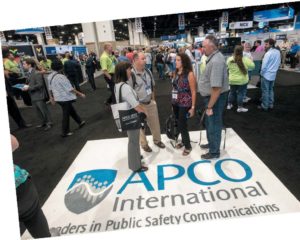
Whether it’s your first year attending the APCO conference or your first time on any exhibit floor, you need to be prepared for the event. EagleView has exhibited at the APCO annual conference several times, showcasing the many uses of our Pictometry® imagery for public safety agencies. Here are a few of the lessons we’ve learned over the years from our experience on the exhibit floor:
1. Know your way around the exhibit floor. Most, if not all, conferences will publish a map of the expo hall before the event begins. Pay attention to your location on the map to see how attendees may approach your booth. Take advantage of nearby displays. So much is happening on the exhibit floor that can drive traffic your way. Some exhibitors will bring K-9 units and vehicles to the show. If you happen to be near those booths, these can be great conversation starters with attendees.
2. Pay attention to the agenda. The agenda for APCO’s annual conference is set up to optimize vendors’ time on the exhibit floor. It includes plenty of opportunities for attendees to check out the exhibits and meet with new and current vendors. Whether exhibiting by yourself or in a group, the agenda can help you predict when attendees might visit your booth. Ensure your booth is properly staffed during these times.
3. Show up to attendee events. EagleView uses attendee events to interact with customers and prospects in a more casual environment. The event’s organizers always pick great locations for the event. Last year’s event was in Denver, and this year’s event takes place in Las Vegas. This location is sure to draw plenty of customers and prospects for you to meet with.
4. Consider becoming a sponsor. As a sponsor in 2017, EagleView attended the award ceremony and sponsors’ reception the show’s
organizers put on. You might think that just because the event is only for sponsors it won’t bring you any connections. However, this portion of the conference offers ample networking opportunities with APCO leadership and other industry partners. This is just one of the many added benefits of becoming a sponsor.
5. Develop a goal for the event. Sure, you probably already know how important this is, but it bears repeating. Make sure you are clear on why you are exhibiting at the conference and what you plan to get out of it. Some questions you might ask yourself and your team include:
- How many leads do we want to collect?
- What products or services do we want to feature at our booth?
- Will we interview any existing customers to create case studies or
other content?
- How will we communicate with leads during and after the show?
You’ll also want to consider which segments of the public safety industry you want to reach. The good news is that the conference
attracts a wide variety of attendees, including personnel from 9-1-1 communications centers, and sheriff and fire departments,
among others.
No matter what goals you set, make sure your booth has all the resources you need. Be sure to schedule staff, bring any necessary
collateral, and demo your most in-demand solutions in order to meet—and exceed—your goals.
By being prepared ahead of time, you can ensure APCO International’s Annual Conference and Expo is a success for your
sales team.
Claire Foster is Senior Marketing Manager, EagleView.

by AllThingsECC.com | Aug 4, 2018 | Articles, Comm Center News
By Jonathan Jones
Originally published in the July/August 2018 issue of APCO’s PSC magazine.
For access to PSC magazine and more articles like this one, please log in or become an APCO member.
APCO International’s Annual Conference and Expo is almost here! People attend to hone their craft, build quality networks, and find products and services. Savvy conference goers prepare to do six things that build confidence, relax others, assure they benefit professionally, and have a great personal experience. So, what are the six keys to APCO conference savvy? 
INTRODUCE YOURSELF EFFORTLESSLY
Practice out loud: “Hi, I’m NAME from CITY. I’ve been a TITLE for HOW LONG and this is my first APCO conference. Tell me about yourself.” Don’t memorize; just get comfortable speaking it. Who cares if you scramble the order? The only mess up is failure to practice, leaving you sounding uncomfortable, fake or scripted. Don’t miss the “New Attendee Webinar” or this year’s insider tips.
Once you know what to do and how to introduce yourself with ease, you’ll be comfortable joining the New Attendee Reception or the General Session and pre-conference activities to make sure you have your bearings. The more confidence you build, the more comfortable you make others at later conference activities. If you happen to be one of the attendees under the age of 40, try the Young Professionals Mixer that APCO offers specifically to help you settle in with your “tribe.”
EXCHANGE BUSINESS CARDS
Even if you must print your own, this professional tool is essential. Give cards to network with new contacts, make notes about those you meet, and enter contests and get prizes. Use them in the Exhibit Hall as you check out new safety vehicles, have a professional resume review (you must pre-register by July 20 at apco2018.org/resume), go on a quest for prizes, visit vendors for product and service innovations, collect freebies, have lunch and take your phone to the Recharge Lounge. Drop your cards in all the containers for chances to win, and use cards you collect to follow up with contacts on social media after the conference.
INITIATE CONVERSATIONS
The best networkers make others feel welcome. Learn to ask open-ended questions that cannot be answered with one word. Practice aloud until you have three to five you can use as needed. For example, “How did you get started in this industry?” “What did you think was the most important point of the presentation?” “What’s your favorite part of your job?” These questions are always welcome at APCO networking events, like the eight networking receptions, parties, lunches or dinners, as well as informal opportunities in break rooms and hallways, while registering to vote, or while attending the blood drive or a committee event. Don’t know who to approach? Look for others with a New Attendee ribbon. And perhaps you’ll wear your conference T-shirt to help identify yourself with others around the venue!
FOLLOW A SCHEDULE
APCO offers something for everyone! That doesn’t mean you should try to do everything. Visit apco2018.org to view the schedule at a glance and identify don’t miss activities. Download the app when you register with our Attendee Service Center to set your itinerary. Review our nine tracks for continuing education credits, as well as the Career Advancement Center and Presentation Theater sessions. Also, schedule sleeping and breaks. Crowds energize extroverts and drain introverts, so manage your wellbeing. To maximize learning and networking, APCO also offers health and wellness sessions. You can carry around our mega notebook of materials or use the app to lighten your load, track your schedule, complete evaluations, access handouts, sign up for CEUs and more!
TAKE NOTES
You think you’ll remember because it’s all so exciting or motivating— but you won’t. Research shows taking notes is the best way to retain information. So, use a notebook or mobile device. For best retention, take notes as if must present the information to someone else later. Your notes can also help you add to your repertoire of open-ended questions.
FOLLOW UP
Reinforce your contacts and what you learned. Networks are made of relationships, not one-time meetings. Tell conference organizers of good experiences. Lots of people complain; few appreciate. Email a summary of your notes and key conference take-aways to colleagues who couldn’t attend. Add your business card collection to your contact manager. Connect regularly by email, phone and social media. Volunteer to help with next year’s APCO Conference New Attendee and Young Professional events. These conference keys build the professional relationships that enhance your career.
Jonathan Jones is a 9-1-1 Communications Supervisor with the Athens-Clarke County Police Department in Athens, Georgia. He is also Chair of the APCO Young Professionals Task Force and Vice-President of the Georgia Chapter of APCO. He can be contacted at [email protected]

by AllThingsECC.com | Aug 4, 2018 | Articles, Comm Center News
By Robert Bloom
Originally published in the July/August 2018 issue of APCO’s PSC magazine.
For access to PSC magazine and more articles like this one, please log in or become an APCO member.
What is more fun than attending an APCO Conference? Presenting at an APCO Conference! Not only is it a rewarding experience, but it’s a chance to share your knowledge. It is also a chance to make new friends and learn from one another.
Every fall APCO opens their Call for Speakers, and this is the chance for you to submit your idea for a presentation. APCO accepts both solo presentations as well as panel discussions. After you hit the submit button, your idea is headed down the road with hundreds of others just like it.
The Professional Development Events Committee (PDEC) receives your submission. The PDEC is divided into teams for each track, and here is where the real work begins.
One of the first things PDEC members look for when grading a submission is if it’s filled out correctly. That is probably the biggest section where people lose points. You want to be concise but accurate when you fill out the description for grading. Does it match the objectives you stated? Does it make sense in the track it is submitted to? Make sure to check your spelling, too! Lastly, write up a draft of the presentation and upload it with your submission. This gives the committee a better idea of what your session will look like.
Once presenters have been selected, APCO has a lot of resources to share with them. Between the time a presentation is selected and the conference, presenters receive several emails. One of the first emails introduces speakers to the speaker website, which is filled with lots of information on presenting. It also has an area to post questions, suggestions and ideas. Both returning and new speakers all have access to this website and APCO staff is always available to offer assistance. They can answer most questions and are in contact with the PDEC Committee.
Once speakers arrive at the conference, there are even more resources available. The Speaker Ready Room is staffed by conference volunteers who have phone contact with staff and PDEC members. The room is equipped with tables and chairs as well as a projector,
allowing speakers to check their laptops and test their PowerPoint presentations. Speakers should check in with the Speaker Ready Room as soon as possible so the Committee knows they made it to the conference. One question that is always asked is about handouts. It is tough to say how many attendees will be at each presentation, so it’s usually easier to include handouts as part of the PowerPoint since they will be included with the recordings. One tip is to ask for cards and list your contact information on the last slide, so attendees can contact speakers directly afterward.
On the day of the presentation, the convention center audio-visual (AV) staff will stop in to help with any connections and set them up with wireless lapel microphones as well as handheld microphones. AV staff will be in and out during each presentation to monitor sound levels since all sessions are recorded. Each presentation has a dedicated room proctor who introduces the speakers and their topics, and also holds up a sign when speakers are getting close to the end of their session. PDEC staff are also moving about and usually check in on first-time presenters. So if you have some first timer jitters, just let someone know.
Once you get started, it is really easy. Besides, you are among friends that do the same kind of job that you do, so share your knowledge and experiences with them.
Now it is time for you to have fun and enjoy all of the new friends you’re about to meet!
Robert Bloom is Public Safety Systems Administrator, Department of Emergency Communications in Alexandria, Virginia. Bob has been working in public safety for almost 30 years. He serves as APCO’s Chair for Professional Development Events Committee, Vice Chair of Cyber Security Training Writing Group and a member of the Cyber Security Committee. He will also be Chair of APCO’s 2019 Baltimore Conference Committee.