Montgomery County Experiences 9-1-1 Service Disruption
‘We are the first, first responders’: Growing need for 911 dispatchers
SIP Emulation to Support Instant Messaging using MSRP for Next Generation 911 (NG 9-1-1)
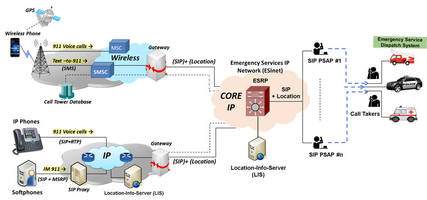
GL Communications Inc. a global leader in telecom test and measurement solutions, enhanced their MAPS™ SIP Protocol Emulator (version 8.10.15) with Message Session Relay Protocol (MSRP), that enables MAPS™ SIP software to send and receive 911 Instant Messaging Public safety service providers can deploy this test tool for testing their NG 9-1-1 emergency services and components within the Emergency Services IP Network (ESInet).
“NG9-1-1 networks based on the National Emergency Number Association (NENA) i3 standards define network transformation route to receive and respond to NG9-1-1 emergency requests via multiple media sources such as SMS, Video, Email, and Instant Messaging (IM)”, said Mr. Vijay Kulkarni CEO of GL Communications.
“Major wireless carriers have committed to providing Text-to-911 services to end users. In addition to these primarily carrier dependent services, there are many Over the Top (OTT) IM apps which connect users with the NG9-1-1 system directly”.
How new technology used by 911 dispatchers helps pinpoint cellphone locations and save lives

O’Rielly Asks New Virgin Islands Governor to Stop 9-1-1 Fee Diversion, Says USF Funds at Risk
O’Rielly Asks New Virgin Islands Governor to Stop 9-1-1 Fee Diversion, Says USF Funds at Risk
O’Rielly acknowledged a letter from Bryan Jr. asking for additional resources to help rebuild the territory’s communications infrastructure in the wake of the 2017 hurricane season, and said he would review any items that came before him, but he also wanted to make the governor aware of the fee diversion.
“As a steward of the ratepayer-collected monies for USF disbursements, I would find it extremely difficult to support providing additional USF funding to the Virgin Islands without a firm commitment and a timeline from your administration detailing how you are prepared to put an end to fee diversion practices once and for all,” O’Rielly’s letter said. “Moreover, I am not alone in my desire to put an end to 9-1-1 diversionary practices throughout the U.S. and its territories, as both FCC Chairman Pai and Commissioner Rosenworcel have been actively engaged with me on this important matter. Your guarantees and demonstrated compliance plan could go a long way toward alleviating commission concerns, which if left unadressed could put precious USF support at risk — an unacceptable outcome and not one that the commission would take lightly.”
In 2017, the territory diverted more than $1.2 million in 9-1-1 fees to other functions, according to O’Rielly’s letter. Specifically, the Department of Health and the Virgin Islands Fire Service each received about 30 percent of the 9-1-1 fees in 2017, and the funds were used on repairing ambulances, fire service equipment and facilities, and travel and training for non-9-1-1 personnel, the letter said.
“Regardless of whether these priorities serve a meritorious purpose, such a funding diversion is an unacceptable breach of trust and responsibility, as the collection of this money is expressly authorized for a specific and critical purpose,” the letter said. “Officials owe it to the emergency personnel tasked with answering critical calls and to the Virgin Islands’ residents in need of emergency assistance to ensure that 9-1-1 fees go directly toward 9-1-1 services. This situation is even more problematic given the huge expenses of upgrading and modernizing 9-1-1 systems to next-generation capabilities.”
O’Rielly cited Puerto Rico, which had recently taken steps to stop 9-1-1 fee diversion as an example and said he was willing to provide the Virgin Islands with more information on how Puerto Rico stopped its diversion.
Would you like to comment on this story? Find our comments system below.