by AllThingsECC.com | Jul 15, 2019 | Articles, Comm Center News
Obtain these three rights to implement FirstNet into your emergency response communications system
By Tim Nowak
One of the challenges observed after 9/11 concerned emergency response communications … particularly in the presence of a disaster. Congested zones, damage to the infrastructure, inconsistent platforms; these challenges are not only present during a disaster, but also on a daily basis for some communities.
Rush-hour traffic at 4 p.m., providing medical staffing at a professional sporting event, or shuffling through the aftermath of a hurricane or major storm – these are just a few of the seemingly “regular” instances during which many emergency services experience a breakdown in the communications network.
This article was written by Tim Nowak and appears in ems1.com dated July 10, 2019. To read the full article please click on the button below.
READ FULL ARTICLE

by AllThingsECC.com | Jul 11, 2019 | Articles, Comm Center News
This week the Public Safety Communications Research (PSCR) organization under The National Institute of Standards and Technology (NIST) is holding its annual meeting to discuss with public safety and the vendor community how its research is progressing, how it has provided funds to others for projects and, of course, to present some technology demonstrations. Unfortunately, I am not able to attend the event this year but I will be reporting on PSCR’s findings and activities in next week’s Advocate.
Push-To-Talk Interoperability
Last week’s Advocate outlined my view of the important issue of how to ensure any and all Push-To-Talk (PTT) applications certified by FirstNet interoperate with all other PTT applications on the network. My preference is to use over-the-top push-to-talk applications since these applications can be used on devices on several networks and still communicate with each other. This is as opposed to the on-network approach favored by one of the existing approved vendors (Kodiak/Motorola) and the 3GPP as it develops its standard.
I received a lot of email and comments that were mostly positive, but I had failed to mention Tango Tango, a push-to-talk vendor also approved by FirstNet. After the Advocate was published, I received a flurry of emails from the company and we set up a conference call. In the meantime, Tango Tango provided this snippet of its business model: “The main point is that our business is centered around exactly what you have described in this article and others in the past. We are completely carrier agnostic, have experience with every kind of radio system, and are device agnostic (iOS, Android, PC) to provide the most flexible interoperability. We provide interoperability and radio integration as a service which allows us to be able to solve these problems for agencies at a very low cost while still providing exceptional customer service.”
New Technologies
While many public safety communications folks, FirstNet, and the FirstNet Authority are attending the PSCR conference and will report on what is new and exciting, I want to mention some technologies I have seen highlighted on Twitter. According to Fast Company, “Cheddar,” founded by former BuzzFeed president Jon Steinberg, is apparently looking for funds to invest in small start-ups with good ideas. Most recently, Cheddar has been publicizing two new devices for law enforcement. The first device can be deployed by a police unit that is positioned in front of but to the side of a vehicle being chased. When ready, out pops a set of spikes that can be maneuvered in such a way that the pursued vehicle will run over them.
The other one that caught my attention is a front-loaded torpedo-like device that mounts on a police unit and fires what looks a lot like a shotgun shell. This “shell,” is actually a GPS tracking device designed to stick to the vehicle in front of the police unit. An Unmanned Aerial Vehicle (UAV, drone) or other law enforcement units can track the tagged vehicle or locate it when police are ready to apprehend it, thus eliminating the need for high-speed chases that endanger others. Cheddar has many other helpful devices to introduce, but as interesting as they are, and as strapped for funding as the public safety community is, I have to wonder if these innovative devices are must-have products.
At the International Association of Chiefs of Police (IACP) Conference a few years before FirstNet, I saw what was touted as the police unit of the future. It had a plethora of gadgets including 360-video to enable officers to see anyone coming up from behind, an amazing assortment of warning lights, lots of radios, and Mobile Data Terminals (MDTs). Some provided the capability for officers to send and receive live data whenever or wherever. The unit was so full of electronics I’m not sure there was any storage space, and the price tag of all the technology was about twice the cost of the unit itself. It would be great to be able to equip our law enforcement vehicles with all this and more, but I don’t know of a single department that has that much money.
The good news here is that a considerable amount of the technology being developed for self-driving cars is finding its way into new models of cars that still require drivers. For example, the 360-degree cameras now included on 10 or more SUVs would be a great addition for law enforcement to help monitor surroundings. Automatic braking, multiple sensors, and rear-view cameras have become standard and many technologies Motorola was touting are not far into the future or as expensive as they were.
FirstNet Authority Roadmap
I am especially interested in what the FirstNet Authority Roadmap looks like because while there is a need to advance technologies, this has to be accomplished in such a way that agencies can base their decisions on how a technology will assist them on a day-to-day basis and not how much it cost. Because budgets are tight and allocations are not easily obtained, roll-out of body cameras was slow for many agencies and it has taken a long time to equip all law enforcement with body cams. For example, in Phoenix, while not every officer is currently equipped with a body camera, the Major has committed to outfit all officers with body cams by August. The FirstNet Authority does not plan to fund body cameras or other items not directly related to public safety communications. However, it does appear that during the next reporting period with 600-plus sessions and more than 15,000 public safety representatives, the Authority plans to gather enough information to learn what public safety thinks is needed to “finish” or augment the FirstNet network (no network is ever “finished!”).
The FirstNet Authority’s most difficult challenge will be to sift through the thousands of suggestions and comments, review the plan as presented to the board, and arrive at a roadmap that melds the goals of the Authority with the wants and needs of public safety. I trust much of this effort will include FirstNet (Built with AT&T) since it is the contractor for the network for the next twenty-some years. Funds made available by the Authority can be spent by FirstNet, perhaps by states that file plans for its use, or for the Authority to purchase new technologies or in some other way enhance operation of the network. How this all works out will be interesting to follow, as will how the FirstNet Authority, FirstNet, and the public safety community arrive at a consensus of what needs to be done and how these needs will be prioritized.
NG911
While chatting over lunch with a vendor friend who is deeply involved in providing equipment to agencies using FirstNet, he mentioned that in some areas he covers he is finding that the FirstNet push to add new customers is being based on push-to-talk over FirstNet as opposed to PTT, data, and video. While discussing this I suggested that since he was more on the data/video side of things he, his company, and others should push for Next Generation 9-1-1 (NG911). NG911 is designed to enable receipt of data in the form of text messages, pictures, and videos from callers at Public Safety Answering Points (PSAPs) where it will be vetted as best as possible and then sent on to dispatch where it can be sent out to responding personnel, vehicles, and watch commanders.
This data flow will be substantial as each new NG911 system comes online. If we can obtain funding for NG911 through Congress and it is implemented, the data must be processed faster than in the past. Final standards must be worked out and there are still far too many computer-aided dispatch systems that are not compatible with each other, but these issues can be resolved. What remains is to improve the data flow to the field. Examples of such data are pictures of license plates to enable incoming units to apprehend an offending vehicle as it leaves an area or a video of a building fire that alerts the fire department of a working fire. Any information that helps first responders understand what they are heading into is better than a simple voice dispatch that provides only call information.
Then there is data coming in from the field. A missing child’s picture obtained by law enforcement can be sent to the dispatch center and forwarded to others in the area so they can keep an eye out for the child. UAVs, or drones, are also playing a more vital role in public safety. It is not uncommon for a UAV to be used to locate an elderly person who has wandered away, search for a missing child, or fly over an incident and send aerial videos to those in the field. UAVs are able to carry communications payloads and water, and the EMS community is using UAVs to drop supplies, perform assessments, or both.
More and better tools for public safety are enabling first responders to report to incidents with more knowledge about what they facing than ever before. In an Advocate written around 2010, I predicted that FirstNet would give eyes to those in the field who have been operating with limited voice capabilities. We are still learning about the network’s full capabilities, coverage, and devices, and how it works. PTT over FirstNet is a great capability, but users are learning that PTT needs to be interfaced to their Land Mobile Radio (LMR) systems and that different vendors’ PTT over FirstNet services need to talk to each other. FirstNet changes everything today and promises a series of even greater tomorrows as the network approaches its full potential.
We have come a long way since FirstNet was first discussed in 2006, and we have come a long way toward a network dedicated to public safety. What lies ahead is to learn how to use this new network more effectively and more efficiently. The changes coming to wireless technology over the next few years will alter much of what we now know, but one thing that will not change is that communications saves lives of both citizens and first responders.
Winding Down
I continue to hear about coverage issues and that FirstNet is not on a par with other networks. However, when I drive the areas with my Sierra MG-90 with two networks onboard, I find FirstNet coverage to be much improved compared to only months ago. I also read almost weekly of AT&T’s huge investments in state after state and in tribal areas. Other networks are busy implementing similar plans but FirstNet is a real incentive for AT&T to move forward faster than its competitors, which shows in the coverage I am seeing. Band 14 is also up and running in many places and is being deployed in many more.
This is redundant on my part but agencies need to understand that had another bidder won the FirstNet contract to build out only Band 14 we would not be as far along as we are. FirstNet (Built with AT&T) promised to provide full priority and pre-emption across all its LTE spectrum, build out Band 14, and now includes 5G portions of the network. As a result, the public safety community, which I feel I am part of, is well ahead of schedule.
It’s hard to be patient. I used to have a sign that read, “God grant me Patience and I want it NOW!” Between the FirstNet Authority and FirstNet, we are far ahead of the contract milestones and I believe we will continue at this pace until the last milestone has been met. Even then, FirstNet (Built with AT&T) and the Authority will be working on what’s next, what public safety needs next, and how soon it can be made available.
Andrew M. Seybold
©2019, Andrew Seybold, Inc.
by AllThingsECC.com | Jul 10, 2019 | Articles, Comm Center News
By Dean Prochaska, Senior Director of Standards
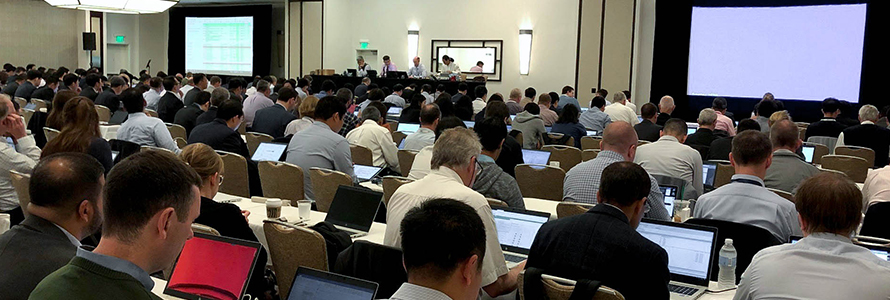
The June quarterly Third Generation Partnership Project (3GPP) meetings in Newport Beach, CA addressed standards in several areas relevant to the evolution of the public safety broadband communications and the Nationwide Public Safety Broadband Network (NPSBN).
The major topic across the 3GPP plenary meetings was planning for 3GPP Release 17 (R17). This release will be built on the work and features already defined in earlier releases. In particular, R17 will build upon R16, which is expected to be frozen by March 2020. The expected freeze date for R17 is June 2021. This is still a preliminary target date that has created significant discussion and should be firmed up by December. There are many diverse interests in 3GPP and the planning for a release involves much discussion and compromises among operators, vendors, and other entities, such as the FirstNet Authority. The following information provides details on each of the plenary meetings.
READ FULL ARTICLE

by AllThingsECC.com | Jul 3, 2019 | Articles, Comm Center News
A few weeks ago, I wrote about the need to find better, open-standard ways to bridge the gap between Land Mobile Radio (LMR) and FirstNet for Push-To-Talk (PTT). The Public Safety Technology Alliance (PSTA) has completed phase one of its work and plans to publish its findings soon. Next is the need to similarly address two other solutions discussed in the report: Dispatch Fixed Station Interface (DFSI) and Radio over Internet Protocol (RoIP). Meanwhile, the PSTA committee and others will be back at work focusing on providing open-standard, less-expensive solutions to tie LMR and FirstNet (or broadband) systems together.
For public safety, this means when an agency puts out a call for help from neighboring agencies or even agencies many states away, those responding to the incident will be able to use FirstNet to communicate with the local agency by bridging their LMR systems to the FirstNet network. The primary reason so many fought for FirstNet was to enable interoperability between networks. Today, first responders are able to communicate with each other. The number of public safety officials, vendors, contractors, and others who came together for a common cause that resulted in the passing of a law establishing FirstNet speaks highly for the public safety community.
However, the ability to cross-communicate between LMR and FirstNet or other broadband systems is only one part of the solution. The other part is to figure out how to enable the various FirstNet push-to-talk systems to communicate with each other. I have been assured by FirstNet (Built with AT&T) that it is fully committed to providing only open standards on the FirstNet network. Even so, if you look at where we are today with interconnectivity over LTE (FirstNet), you will find three that companies are certified to provide PTT over FirstNet. The first is Kodiak Networks (now owned by Motorola) with a network-based technology. The second is ESChat with an over-the-top application, meaning it can operate on multiple LTE networks and all common groups can be tied together regardless of the network being used. Orion is the third approved vendor, also with an over-the top-application. As with ESChat, Orion claims to be network-agnostic and, for the most part, device-agnostic and can provide LTE-to-LTE PTT (and WiFi) between networks.
Interconnectivity over LTE is important since many agencies that have signed up with FirstNet still maintain a relationship with at least one other network. This is because while FirstNet is being built out quickly, there are still some areas where another provider currently offers better coverage. Another reason is that some agencies are moving slowing into the FirstNet world to test the waters. For the moment, they are retaining their other carrier for some of their activities.
Now let’s turn our attention to the current state of PTT over FirstNet. Rumors persist that another vendor will be approved in the near future. I have written about my concern that this vendor, if my information is correct, has built a robust Mission Critical Push-to-Talk. One reason it is “great” is because the application has been built into its chipset. If true, using this new PTT will mean you will be limited to one brand of phone while the other three vendors provide PTT over many different brands and types of devices. The next thing on my agenda is to set up a meeting with this vendor to find out if the information I have received is accurate.
I have discussed this issue with a few people and received mixed reactions. One person stated that Kodiak is not an open standard and to emphasize this, pointed to the fact that the Verizon flavor and AT&T flavor of Kodiak are not compatible with each other. Others believe ESChat and Orion are not open standards either. My conclusion is that what matters more than a discussion about if and who has a proprietary PTT solution approved for FirstNet is how and how soon these PTT solutions will be capable of interoperability.
I consider PTT interoperability to be as vital as LMR-to-FirstNet integration. If an agency calls for assistance from three or four different agencies outside their jurisdiction and each is using a different PTT-over-FirstNet technology, have we really solved the central issue brought up by the 9/11 Commission, which is how to make communications for all public safety agencies interoperable?
The PSTA has a committee working on interoperable PTT, the 3GPP is finalizing a “standard” to enable cross-vendor PTT, and The Critical Communications Association (TCCA) has held numerous “Plug Fests.” However, from what I have seen all this effort is focused on PTT systems that must be embedded directly into the network. This means ESChat and Orion, and perhaps the new rumored PTT provider, will not meet the MCPTT standard.
If the standard does not accommodate both cross-vendor and cross-network PTT services, we will have missed the mark for public safety. Think about LTE becoming nationwide for public safety, then think about what happened when a major earthquake hit the South Island of New Zealand a number of years ago. New Zealand was first to respond and assistance came from Australia, the United States, and elsewhere. As it happened, Tait Communications had people at the airport giving out handheld radios that were compatible with New Zealand’s communications system. A few years into the future, what would happen if agencies from other areas arrived only to discover their LTE PTT was not compatible with the home system?
According to the 3GPP and TCCA, this would not happen, but I have to believe there is and will continue to be a need for over-the-top PTT applications that can be easily and quickly installed in LTE devices when and as needed. If you showed up in Santa Barbara County, Calif., with your Motorola Kodiak PTT, you would find the County using ESChat tied to its LMR networks. While I know FirstNet should be the main focus for nationwide public safety communications, there are still public safety users on other networks. Only over-the-top PTT applications can help solve the problem of multi-network PTT. They are more versatile and better suited for true interoperability in today’s world.
Some progress is being made today. ESChat can, in fact, interoperate with Kodiak’s PTT system and can and has integrated P25 trunking systems using its own flavor of ISSI. According to TCCA, at last count more than thirty vendors passed TCCA interoperability tests. Some are PTT vendors, others are back-end or on-network vendors. I would prefer to see a much smaller number of approved PTT vendors and I am in favor of both on-network and over-the-top vendors, especially if the on-network vendors can be convinced to work with other networks to cross-connect PTT.
Many years before FirstNet, Nextel was purchased by Sprint and went with Qualcomm’s QChat while Kodiak won AT&T and then Verizon. As I have pointed out before, if we look back at history, we will find fast growth in the cellular industry occurred only after one network finally permitted subscribers to call people on other networks, and text messaging languished until it was available from network to network. While I agree FirstNet should continue without allowing core sharing or network sharing, in the case of PTT, I believe it is important to provide bridges between all LTE networks at least for the near future. At the same time, we also need to be mindful that each LTE network is somewhat different from the others. With every 3GPP release of a next version of LTE, each network operator is free to pick and choose which new features and functions to use in its network. Some differences are minor, some not. In spite of any differences, over-the-top PTT applications seem to work well from network to network and cross-network.
Someday FirstNet will be the primary public safety broadband network in the United States. Network deployment is far ahead of schedule and coverage differences are closing fast, but there are other reasons to maintain cross-network PTT capabilities. In a major disaster there will be second responders along with state and federal government personnel who arrive with non-FirstNet phones. If software can be quickly and easily installed in their devices to enable them to communicate with the other teams, our responses will be better coordinated and more effective.
Winding Down
San Jose, Calif., made a big splash when it joined FirstNet as the first metro area to go all-in by including all its first responders and other government personnel on the FirstNet network. I had thought some other cities had already joined on an all-in basis, but if not, San Jose should stand out as a model for other cities to follow. Congratulations to San Jose!
SpaceX
SpaceX says most of its little Low Earth Orbit satellites (LEOs) are in operation and it will soon be running tests on fifty or so to determine actual data speeds and system latency. Its press release states that five-percent of its Starlink satellites have failed and it plans to take two out of orbit and let them burn up as they enter the Earth’s atmosphere to prove they won’t contribute to more space junk over time. This is the first time I heard about this plan but it sounds like it could be a good idea. SpaceX’s other news is that in addition to orbiting 11,000 little LEOs, it plans to build up to a million Starlink earth stations. Called “Starlink Services,” they will be built by another company and design plans call for a flat-panel phased-array system to transmit and receive signals in the KU-Band for the Starlink constellation.
Drones (Unmanned Aerial Vehicles, UAVs)
I now have my second drone, this one with automatic homing. I have applied for and received an FAA Small Drone Registration ($5) in spite of the FAA site being very confusing. The first site I was sent to says you can register more than one drone and buy ID stickers for them, but that site did not work. I filled in the information three times and three times it went into limbo. Then I found USA.FAADroneZone.FAA.gov, sent in my $5, and received my Small UAS Certificate of Registration. I am not sure if it covers both of my drones, perhaps the public safety UAS guru can help me here. In the meantime, I am looking for a simulator I can run on my Windows PC. There are many out there but most cost more than my drones (several cost more than one drone). If anyone knows of a good simulator for UAS flight, please let me know.
I am reading more and more about how UAVs are being used in the public safety community. Some are used as advance scouts, some carry water, and some are outfitted with radio packages. Many carry cameras for aerial views of incidents, lifeguards use them to drop life vests, and the EMS community has found a variety of uses for them. The availability of UAVs will continue to challenge the imagination and revamp public safety responses and activities. It is surprising, or perhaps not, how fast UAVs have “taken off,” so to speak. I hope to see some at APCO but if not, I’m sure there will be a number of UAVs on display at the IACP show later in the year.
Until Next Week
Andrew M. Seybold
©2019, Andrew Seybold, Inc.

by AllThingsECC.com | Jun 30, 2019 | Articles, Comm Center News
FirstNet Built with AT&T, is pitching in too
By Christopher Vondracek
Hoods For Heroes (HFH), a national nonprofit organization headquartered in Northeast Florida,was launched to bring new chemical-resistant protective hooding to firefighters. Studies show nearly one third of firefighters contract cancer, whether skin, thyroid, or testicular, during their lifetime due to smoke absorption. This was too high for one of the nonprofit’s founders, Jeff Rountree, who has a background in high-risk insurance. “With these higher risks [of cancer], Hoods For Heroes is trying to do our part to make sure these folks have the right equipment,” said Rountree, in a company video. “It’s truly unacceptable.”
Now AT&T’s FirstNet family is joining up with Hoods For Heroes to ensure their campaign is successful. Earlier this year, FirstNet Built with AT&T helped organize a fundraiser in Ocala, Florida to raise money to donate to Hoods For Heroes. “Different organizations have charities they work with, but one of the things for my team is that this is an organization that is taking more of a preventative approach,” said Nicki Auth, FirstNet Field Marketing Manager, with AT&T. It also aligns with AT&T’s longstanding commitment to public safety and finding new ways to enable public safety communication.”
Most firefighters wear the standard Nomex hoods under their helmets that are made of terry cloth. Studies show that when wet these terry cloth hoods can absorb cancer-causing toxins through the thinnest skin on a firefighter’s body, the head and neck, which puts them at a greater risk of developing cancer. According to reporting in The Atlantic, part of the problem comes from household plastics for cleaning and in modern furniture.
“For the longest time, we wore the Nomex hoods. The Nomex hoods allowed the smoke to penetrate the hoods and get on our neck,” said Bill Banks, at the Ocala event. “When our skin temperature rises five degrees, our body temperature absorbs 400-times more.” Particulate blocking hoods are comprised of strong fibers that shield the head and neck. However, there is one drawback. “They are very expensive, as you can imagine,” said Emily Tanzler, a radiation oncologist with Cancer Specialists of North Florida. Roughly 70% of firefighters are volunteers and assisting with prohibitive costs is very beneficial. Nomex hoods can cost $10 to $25 whereas chemical hoods can run as high as $180 per hood but reduce exposure above the neck by 99%.
The organization has already provided $40,000 worth (or 330 hoods) to firefighters in St. John’s County, Florida in December. Donations have also been made to personnel in Clay County, Florida. Hoods For Heroes says it wants to raise enough funds to provide every firefighter in America with at least one protective hood. “There is a huge demand out there for these protective hoods,” said Auth.
More information on the organization or upcoming fundraisers can be found at hoodsforheroes.org or at the nonprofit’s website, https://www.facebook.com/HoodsforHeroes.
Christopher Vondracek is a freelance journalist living in Washington D.C., most recently with Courthouse News.

by AllThingsECC.com | Jun 27, 2019 | Articles, Comm Center News
By necessity, this week’s Advocate will begin at the beginning. During the FirstNet RFP process there were three bidders. As we all know, AT&T won the bid over Rivada Networks, which bid and was disqualified. Rivada sued FirstNet and the award was tied up in court for some time. For those who would like additional details on Rivada’s activities, I will refer you to a recent article in the New Yorker by Sue Halpern in which she writes about what the company is up to here and around the world and its track record.
In the United States, Rivada is attempting to obtain spectrum not being used by the Department of Defense that is worth literary billions of dollars without paying anything. With high-priced lobbyists including Karl Rove, it has come up with a plan to acquire this spectrum by promising to serve rural broadband communities. As a result, Rivada would stand to make huge profits using free spectrum. FirstNet already has an obligation to cover rural America, and if the T-Mobile/Sprint merger is allowed to go through, the company will commit to providing 5G to rural America. More than 11,000 little Low Earth Orbit satellites (LEOs) are to be launched in the near future, perhaps covering the world, and hundreds of smaller players are also focused on delivering broadband to rural America. Even Congress and the FCC are studying how to extend rural broadband into areas where it is not available today.
Do we really need another company promising to build out rural America, especially one that has a poor track record in wireless services? Is it worth giving away billions of dollars in spectrum for a promise and lining Rivada’s pockets? I highly recommend reading the article in the New Yorker. I believe like me you will come away with a much better understanding of this situation and the implications if Rivada is successful. The article speculates this spectrum award will be taken up by Republicans in hopes it will gain traction and assumes this proposal has not yet been endorsed by the President, who could easily make it a 2020 campaign promise. Rivada’s other claims include the prediction that this could destroy China’s hold on the United States communications segment. I hope anyone contemplating this award will take a more realistic approach and study the facts before making any commitments.
More on 5G
I have heard there are issues with 5G and others have shared their concerns in an article in Light Reading. Most disturbing of these is that some network operators feel the need to convince the public safety community that 5G is fully ready for its use. One network recently issued a statement claiming all 5G would be interoperable because of standards and the inclusion of Quality of Service (QoS). The problem with this is that according to Light Reading and the 3GPP website, release 16 of the standard has not been finalized and probably won’t be until mid-2020 or beyond. Under the circumstances, I don’t know how this vendor can make such a claim.
5G is an exciting technology implemented on different portions of spectrum that will result in different coverage, capacity, and speeds. Mid-band systems will have an extended range but not the same capacity or data speeds as 5G systems using millimeter waves, which will offer fast data and lots of capacity but in very small areas. The plan is to deploy many millimeter sites to saturate an area, e.g., where there are smart streetlights or where a greater density of cells would be practical. There is also an interesting 5G concept called “network slicing” where a cell being used by different vendors on the same slice of spectrum is shared. However, it appears all this is a long way from being real. 5G is a technology to watch and even experiment with but for now, I don’t think 5G can be considered public-safety grade.
FirstNet Uplifting
The following comes directly from Dave Mulholland, Arlington, Virginia. While I had not been aware of this aspect of uplifting, I decided to report on it here to elicit readers’ feedback. Every so often, this customer has to contend with major public safety personnel issues. According to Dave, there may be 30,000 or more public safety personnel in a very small footprint at the same time at least once every four years. It has been discovered that FirstNet local control for uplifting a user to full priority/preemption status can be accomplished by any person anywhere who is capable of uplifting. This means those in control of the incident do not necessarily control who is uplifted and under what circumstances. Even when coming in to help from outside the area, users can be uplifted by their own local control regardless of whether or not the uplift has been authorized by the incident commander.
I hope this was simply an oversite on FirstNet’s part and it can be rectified. It makes most sense to restrict uplifting on an incident to the local Emergency Operations Center or Incident Command and not allow arbitrary uplifting by a well-meaning person in the unit’s home area. The end of the email is directly quoted as follows:
“The Metropolitan Washington Council of Governments has just begun proactive efforts in the National Capital Region to create policy and governance for FirstNet local control and looks forward to sharing our ultimate products as model policies for other areas. It is important for us to remember that FirstNet is only 2 years old, it is still a toddler. A toddler makes some missteps while learning to walk, and that’s ok. We need to be patient as a program as ambitious and extensive as FirstNet learns to navigate the practical application of the network in public safety. Meanwhile it is important that public safety understand that the current infrastructure allows any person to uplift any device from any other jurisdiction anywhere in the country, without mechanism to cancel an uplift. We look forward to working collaboratively with FirstNet to understand the significant implications this can have, to evaluate and implement better controls on where and which uplifts can be made, and to create an uplift cancel mechanism. FirstNet will be more responsive to the collective response from public safety. It is important for us to advocate as the whole public safety community on addressing this issue.”
FirstNet the Authority
The day before this is emailed is also the day of the combined Committee and FirstNet Authority Board of Directors meeting (FirstNet.gov for information). Another item of interest is the FirstNet Authority’s road trip explaining board-approved plans to reinvest in the network and hear public safety’s input for what is needed going forward. I like the idea of the road trip but I am disappointed that for whatever reason The Authority decided these meetings should be closed to all but official public safety personnel. This means those of us who consider ourselves friends of public safety and work with public safety agencies on an ongoing basis are not permitted to sit in on meetings or even watch via video. I think this is shortsighted since if public safety communications supporters knew more about FirstNet Authority plans, we could provide more, pertinent information to departments we work with and perhaps provide input to The Authority as it plans for the future. However, with all that is happening in public safety communications, The Authority has decided these meetings will not be available to the public or even friends and family. I am not quite sure what concerns The Authority might have.
T-Band
Twitter has turned out to be a good source for breaking news and over the past few days several people have contributed to a Thread initiated by Bill Schrier on the T-Band giveback. It began with, “The Federal Government’s Accountability office says ‘Don’t Boot Emergency Personnel and #firstresponders from the T-Band spectrum’” (a requirement of the law creating FirstNet). Bill ended his tweet by saying this is good news for @TBandCoalition, @AndySeybold, and public safety. He then referenced an article in Nextgov that goes into more detail and ends with, “The GAO also found there is no other spectrum available for emergency personnel to relocate their communications to in 5 of the 11 Metropolitan areas.”
The NPSTC report went further stating all eleven metro areas that now use the T-Band would be affected and not only is no spectrum available, there are no funds to pay for the relocation process. This is all good news for the movement to rescind the T-Band giveback and I hope those in Congress, pro-public safety or not, will take action to stop the T-Band from being returned for auction.
Again, the fallacy with placing a value on this spectrum in the millions or billions of dollars is that it is not nationwide and the same portion of the spectrum is not being used in all eleven metro areas. Each area was assigned a portion of spectrum in the T-Band that would not create interference to TV broadcast stations and TV broadcast stations would not interfere with T-Band users. What the GAO did not say is that the many business radio users licensed to use the T-Band are not governed by the law authorizing FirstNet that requires the giveback. Even if the T-Band were to be cleared of emergency personnel and first responders, business users would remain.
Thanks to Bill for Tweeting this news. I hope this becomes another in the long list of reasons Congress should act on the bills to Stop the T-Band Giveback.
Winding Down
I recently received a nice email from a member of historycooperative.org asking if I would be willing to publicize its latest work on the history of the iPhone. I agreed to do so and have provided a link to its website and the work of this organization. While this does not have much to do with public safety, it is an interesting history of a device that changed the world of wireless as we knew it pre-iPhone. Current iPhones, the Xs and Xr, both have public safety Band 14 onboard and are, therefore, FirstNet-compatible.
This email got me thinking how we need to capture the history of public safety communications. Motorola had a wonderful museum at its then Schaumberg Headquarters, and I understand there are fire and police museums around the United States including one in Phoenix, which has the first radio system in Arizona on display. However, I don’t know of a museum specifically for the history of public safety wireless communications. The National Law Enforcement Museum offers a look into the past, I have my mobile communications newsletters published monthly from 1981 to 2000, my Forbes newsletters, books I have written and, of course, my Public Safety Advocate articles dating back to mid-2010. While I do not have radio hardware as developed over the many years, I do have most of the early wireless modems for CDPD, RAM Mobile Data, and ARDIS, as well as one of the first “smartphones,” a Simon made by IBM for BellSouth with its black-and-white screen and oh-so-slow data capabilities.
The Wireless History Foundation has collected interesting information surrounding the advent and development of cellular communications, and its Hall of Fame features many prominent wireless innovators. The Radio Club of America (RCA) is home to a number of notable wireless personalities and it has a relationship with the Antique Radio Museum. Beyond these, I don’t know of any place where the history of pubic safety communications is showcased. Some vendors have their own devices on display, for example when I was visiting Kenwood, I saw its collection of both ham radio and public safety radio from EF Johnson and Kenwood. Perhaps someone, somewhere will think this is an idea worth pursuing. It would be both educational and interesting to follow the footsteps of Fred Link and Motorola on to today’s FirstNet and discover how technology has evolved and continues to do so.
Meanwhile, today we are still on the cusp of what I consider to be the near-ultimate suite of communications for public safety: Next Generation 9-1-1 (NG911), Land Mobile Radio (LMR), and FirstNet. Once NG911 is in place around the United States, FirstNet will move a large volume of video and data originated by citizens that is vetted at Public Safety Answering Points (PSAPs) and then sent to first responders to better prepare them as they report for duty and assist them as they clear incidents. Land mobile radio will remain a critical element in this roadmap—it is already in place, it provides great coverage in many areas, and it offers several levels of graceful degradation. FirstNet’s Push-To-Talk (PTT) cannot deliver off-network push-to-talk, which is and will remain vital to the first responder community.
The good news is that NG911 is being discussed in Congress, FirstNet is building out and adding to its network in many states, AT&T is deploying 5G that will also be available to FirstNet subscribers, and many land mobile radio systems are being updated and/or refreshed. We are finally reaching a point where NG911, 5G, and FirstNet will work in concert to provide the information and services public safety needs to protect first responders as they protect our lives and property.
Andrew M. Seybold
©2019, Andrew Seybold, Inc.