by AllThingsECC.com | Jul 6, 2021 | Comm Center News
MANCHESTER, NJ — Robert M. Dolan Jr. took over July 1 as the seventh police chief in Manchester Township in a swearing-in ceremony that included promotions and new assignments for nine of the department’s officers.
Dolan succeeds Chief Lisa D. Parker, who retired after 32 years of service. He began his career with the Manchester Township Police Department in 1993 as a dispatcher and was hired as a full-time police officer in 1994. Since then he served in numerous positions, including detective, patrol sergeant, as a lieutenant supervising the Administrative Services Bureau, and his last position was as captain overseeing the Division of Emergency Services…
by AllThingsECC.com | Jul 6, 2021 | Comm Center News
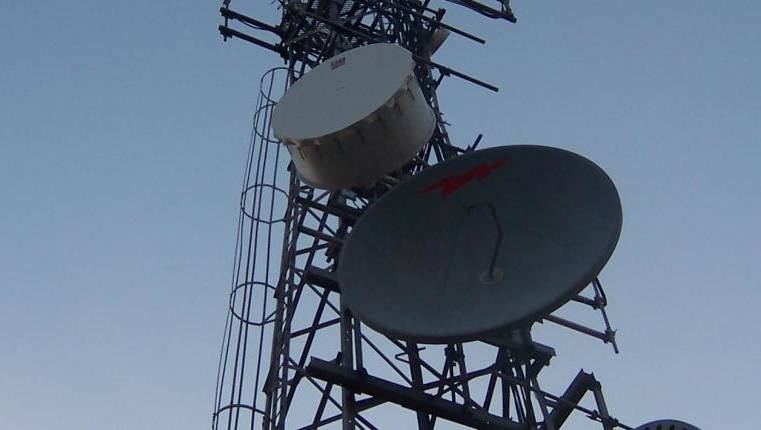
Macarthur has just become a little bit safer thanks to the installation of two new radio sites in the region. Radio infrastructure has been installed at Ingleburn and Yanderra as part of the NSW Government’s expansion to the Public Safety Network’s footprint for emergency service organisations. The NSW Telco Authority delivered 150 new sites, including those in Ingleburn and Yanderra in May and June, to increase operational and mission-critical communications coverage for first responders. The NSW Government describes the PSN as the ‘most critical communications network in NSW’ next to the triple zero emergency hotline. The radio infrastructure provides enhanced encryption options for first repsonders, allowing crews to communicate on a single, integrated network. NSW Telco Authority acting managing director Kristie Clarke said delivering 150 new sites was an important milestone in community and first responder safety. “This significant achievement brings us closer to delivering the NSW Government’s commitment to build a single, integrated radio network to enhance critical communications coverage for the state’s emergency services,” Ms Clarke said. “This is technology that saves lives. The PSN will consolidate multiple separate agency radio networks into one network, allowing critical communications to occur across a resilient and efficient network. “From the Tweed to Bega and west to Broken Hill, we are investing in first-class communications infrastructure to protect people and places.” Ms Clarke said the PSN’s sites were crucial in protecting communities and supporting the Rural Fire Service, Police, Fire and Rescue, Ambulance, and the State Emergency Service during the 2019-20 Black Summer bushfires and March 2021 floods. “Through the Critical Communications Enhancement Program (CCEP), the NSW Government is investing more than $1.3 billion in critical communications, the biggest infrastructure investment of its kind in a generation,” Ms Clarke said. The CCEP has expanded the PSN’s land coverage by 10 per cent to reach over 41 per cent of the state, the equivalent of more than 80,000 kilometres. Population coverage has risen from 86 per cent to 94 per cent, an increase of over 600,000 people.
Macarthur has just become a little bit safer thanks to the installation of two new radio sites in the region.
Radio infrastructure has been installed at Ingleburn and Yanderra as part of the NSW Government’s expansion to the Public Safety Network’s footprint for emergency service organisations.
The NSW Telco Authority delivered 150 new sites, including those in Ingleburn and Yanderra in May and June, to increase operational and mission-critical communications coverage for first responders…people.
by AllThingsECC.com | Jul 5, 2021 | Comm Center News
Area police departments are working to improve the way they respond to 9-1-1 calls.
In Prince William, the county just deployed its new E-911 technology. The system, which is being adopted by public safety agencies across the U.S., better works to pinpoint the location of the 9-1-1 caller to better help first responders find the site of the emergency…

by AllThingsECC.com | Jul 5, 2021 | Comm Center News
Prince William County’s Department of Public Safety Communications has launched the next generation of 9-1-1, called the Emergency Services Internet Protocol Network (ESInet).
The current 9-1-1 infrastructure in Prince William and across most of the country typically allows only for the transport and transmission of voice and small packets of data, according to a news release.
But in an emergency, the call being routed to the correct 9-1-1 center and finding the person’s exact location are the two most important elements for a faster emergency response. Because earlier 9-1-1 systems have limited data and internet protocol capability, it is difficult to get more data across these networks, the county said…
by AllThingsECC.com | Jul 5, 2021 | Comm Center News
When Elizabeth “Liz” Ryan began her nearly 40-year career as an emergency dispatcher in the early 1980s, she used a manual typewriter with a red and black ribbon, a landline telephone and a two-way radio to communicate with police officers, firefighters and ambulance drivers.
Her last day on the job Friday found her seated in front of multiple computer screens.
One screen shows where the person who dialed 911 is located. Another shows the number the call is coming from, where the phone is located or the location of the cell phone tower closest to that phone…