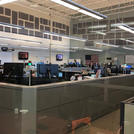
Respond to emergency and non-emergency calls for assistance and information. Perform emergency medical dispatch and crisis intervention services. Ask virtual questions and provide pre-arrival instructions for emergency medical calls. Monitor and operate a radio console and computer equipment.
ResponsibilitiesUnder direction from the Emergency Communications Associate Director, incumbents shall supervise subordinate dispatchers during a specific shift. The incumbent will delegate and review work assignments; provide training and complete performance evaluations; assess staffing needs and develop the work schedules of subordinate dispatchers to ensure the Communications Center is appropriately staffed 24 hours a day, 7 days a week.
Make independent decisions concerning when to deviate from standard operating procedures to appropriately address unusual emergency response situations.
Handle a large volume of radio, telephone and telecommunication traffic; ability to recognize an emergency situation and take appropriate action…
SALT LAKE CITY – Priority Dispatch® is revolutionizing the emergency dispatch industry with its new cloud-based calltaking software, ProQA®Discovery, which can be deployed and maintained 100% virtually, including implementation, training, certification, and quality assurance. ProQA software has long been recognized as the standard of care for emergency calltaking with its research-based medical dispatch protocols created and backed by the International Academies of Emergency Dispatch™. Now ProQA Discovery will help modernize emergency dispatch calltaking by bringing flexibility, innovation, and high performance to communities of every size – especially sheriff-based departments…
Just two months ago, Sharon Scruggs called 911 in a panic. Her grandson, 17-year-old Logan Dillard, was carrying a metal pole when it came too close to a power line, and he was electrocuted. He went into cardiac arrest and stopped breathing, but Ms. Scruggs knew exactly what to do. She called 911 and began CPR on the teenager, listening to instructions from MCHD 911 dispatcher Shirley Alfaro. As firefighters and paramedics arrived, they snapped into action – taking over CPR and administering ALS (advanced life-saving) interventions to re-start his heart.
There is nothing more important during a cardiac arrest than CPR. Every minute that goes by without CPR, not only a person’s chance of survival, but their chances of having a great quality of life diminishes. That is why such an emphasis is put on bystander CPR.
Montgomery County Hospital District is home to its own 911 call center, so every medical call in the county receives at least an EMT-basic on the other end of the call… r more information about the Montgomery County Hospital District please go to www.mchd-tx.org.
Seattle (July 23, 2021) – Building off of the City’s work to reimagine policing and community safety, Mayor Jenny A. Durkan announced a proposal to create a new specialized triage response that will provide an alternative model for some non-criminal 9-1-1 calls and reduce the need for a sworn officer response for some calls. The specialized responses will include professionals that are experts in outreach, behavioral health, and have tangible connections to the communities that they will serve. When at full capacity, this specialized response could respond to the potentially 8,000 – 14,000 non-emergency wellness check calls currently handled by sworn officers at the Seattle Police Department.
“Seattle residents expect and deserve a timely 9-1-1 response, and part of reimagining community safety means providing meaningful and effective alternatives to a sworn officer. Building off of the success of the Seattle Fire Department’s HealthOne model, the new specialized triage response will provide an alternative response to some 9-1-1 calls,” said Mayor Jenny Durkan. “This specialized triage response will be a critical resource as we work to address the needs of our communities while reducing the need for sworn officers to respond to things like wellness checks…
Learn about current efforts to continue to protect the 4.9 GHz Band for public safety as well as recent filings, key decisions impacting these efforts, and how you can support PSSA’s initiative to protect the 4.9 GHz band for public safety.