Mark43 partners with Carbyne to bring cloud-based call-handling, dispatching package to 911 sector

Cloud-based computer-aided-dispatch (CAD) vendor Mark43 today announced a partnership with Carbyne—a cloud-based, call-handling platform provider—to integrate their solutions into what the companies describe as the “first entirely cloud-based incident-response system in the U.S.”

SOURCE: Urgent Communications

DATE: February 26, 2019

Officials for both companies cited the complementary nature of the partnership, noting that both Mark43 and Carbyne share a vision that public-safety answering points (PSAPs) can benefit from the efficiencies and flexibilities that are enabled by cloud-based solutions for both CAD and call-taking.

Matthew Polega, Mark43’s co-founder and vice president of operations, said the advantages of cloud-based solutions are especially evident when an incident requires a PSAP to evacuate its physical facility.

[su_button url=”https://urgentcomm.com/2019/02/26/mark43-partners-with-carbyne-to-bring-cloud-based-call-handling-dispatching-package-to-911-sector/” target=”blank” style=”flat” background=”#005a8c” size=”4″ radius=”0″]READ FULL ARTICLE [/su_button]

Why Train?

Why Train?

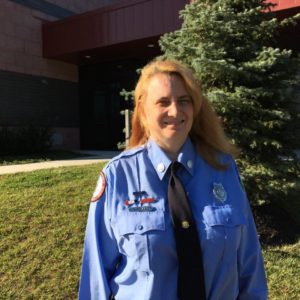
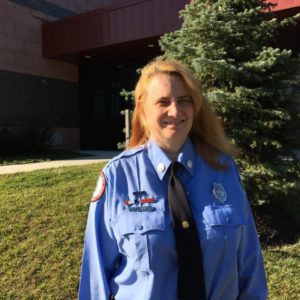
Heidi DiGennaro

When you started, everything was overwhelming. There was fear or excitement in touching the equipment, the constant dread you might break something, and the encouragement to go ahead from your trainer. Training seemed to take so long, and there was something both terrifying and liberating about operating on your own. Now you have a few months, years, maybe a decade or two (gulp!) of experience and everything has changed and some parts remain the same.

Technology moved forward, and in some cases, outpaced our ability to keep up with it. Forward momentum with technology has created challenges and caused us to adapt to keep up. The work—talking to the public and the field providers and ranting at the console when your foot comes off the pedal—has stayed the same. So why train and why train constantly?

Policies and procedures

If you do not have a strong foundation of what to do, policies are meaningless. They are words on a paper or screen if you do not find a way to apply them. It’s not the time to look up an active assailant procedure during an active assailant incident. The same goes for an MCI when heat exposure or a multi-vehicle accident occurs. It’s not good management to quarterback people about how they handled an incident and remind them about the policy they haven’t looked at since it went into effect.

Build confidence

Spend five minutes reading a policy or highlighting a procedure on the off chance you might need it. Mortar the gaps and cracks in your knowledge to create a stable base to lean on when the worst happens. Supervisors need to lead and to lead by example, knowing your procedures and policies. Use any roll call time to go over something, anything, every day.

Public safety

You never know what will happen, and refreshing yourself makes you smart and promotable, if that’s your intent. Training classes teach you what the agency/department does, and it saves you the embarrassment of fumbling for words when someone asks about a certain policy and whether you even have one. Knowing policies and following them during crisis is your best defense when someone outside your organization starts tearing apart your actions.

Liability

When you follow policy, your agency should defend your actions.

I’ve seen a few things in my 24-year public safety career, from police dispatcher, to calltaker, to backup fire dispatcher, to supervisor, to shift manager, with several other specialties in between. I have met people who know the policies, know exactly what to do, and how to do it when the equation Chaos + Oscillation Device + the Smelly Spread presents itself. Training saw me through the worst incidents. I use our roll call time to review, to train, and to amuse.

It’s simple—start now

Pick something to go over and search the internet for an image that matches your training topic. Word of caution: Tell your supervisors so they know your internet history will be a little “interesting.” Make learning humorous—there is always a “fail” out there on any topic. One minute, five minutes, 20 minutes—the time is never wasted. Even if one person remembers what you went over during a critical moment, everyone succeeds. An incident does not turn into a cluster. Someone survives because you and your people knew what to do.

That’s why we train.

New 911 system operating in Cherokee County

Major changes are happening for emergency calls in Cherokee County. 

SOURCE: wspa.com

DATE: February 21, 2019

“We’ve replaced a 30 year old technology,” said Cherokee County 911 Deputy Director Brandon Peeler, adding that changing the infrastructure was a two year process. 

He said Cherokee County has the first 9-1-1 center in South Carolina to implement AT&T’s ESInet.

“Now all of our 9-1-1 lines will be delivered on an IP fiber network,” said Peeler.

[su_button url=”https://www.wspa.com/news/new-911-system-operating-in-cherokee-county/1800785838″ target=”blank” style=”flat” background=”#005a8c” size=”4″ radius=”0″]READ FULL ARTICLE [/su_button]

Photos, private information to be blocked under 9-1-1 bill

In anticipation of an update to statewide 9-1-1 communication systems by 2021, gruesome imagery of crime scenes or injuries, individuals’ medical histories and identification of domestic violence or rape victims may be protected from public view under legislation in the Maryland General Assembly.

SOURCE: The Washington Post

DATE: February 19, 2019

Many aspects of a 9-1-1 call are currently available to the public through Maryland’s Public Information Act, said House bill 215 sponsor Delegate Michael Jackson, D-Prince George’s.

Senate bill 5, sponsored by Sen. Cheryl Kagan, D-Montgomery, is identical and working its way through that chamber.

“I am all about public information, I am all about transparency and yet there needs to be a balance between transparency, government openness and personal privacy,” Kagan said.

[su_button url=”https://www.washingtonpost.com/local/photos-private-information-to-be-blocked-under-9-1-1-bill/2019/02/19/f8970b44-34a6-11e9-8375-e3dcf6b68558_story.html?utm_term=.6e84ef891a92″ target=”blank” style=”flat” background=”#005a8c” size=”4″ radius=”0″]READ FULL ARTICLE [/su_button]

District using new technology to pinpoint location of wireless 911 calls

SOURCE: The Washington Post

DATE: February 17, 2019

The District is using new technology to more precisely pinpoint the location of people who use smartphones to call 911, a shift aimed at getting first responders to emergencies as quickly as possible.

City officials joined with a company called RapidSOS that has helped police and fire departments across the country overcome a critical gap in responding to calls: the inability of modern phones to communicate location data to 911 systems built when people talked only over wires.

It’s a problem because more than 80 percent of the calls to the nation’s 911 centers are from cellphones. That mirrors the District, which fields up to 3,500 911 calls a day.

[su_button url=”https://www.washingtonpost.com/local/public-safety/district-using-new-technology-to-pinpoint-location-of-wireless-911-calls/2019/02/17/150bf0d0-3067-11e9-813a-0ab2f17e305b_story.html?utm_term=.f4ba36c11f4f” target=”blank” style=”flat” background=”#005a8c” size=”4″ radius=”0″]READ FULL ARTICLE [/su_button]