On March 27, the State of Arizona held a public safety broadband forum for first responders, public administrators, and IT support personnel to discuss FirstNet and its impact on the state’s public safety broadband needs. More than 60 local, state, and federal public safety officials gathered in Phoenix to hear from government and industry leaders about the latest developments in FirstNet’s capabilities, discuss their network operational needs, and learn about recent FirstNet use cases.
The forum included a public safety panel discussion with Andy Seybold, Andrew Seybold Inc.; Scott Edson, Los Angeles Regional Interoperable Communications System (LA-RICS); Randy Thompson, City of Mesa; Kevin Rogers, Arizona Department of Public Safety (DPS); and Morgan Hoaglin, Arizona Division of Emergency Management.
Allen Police Department Deploys CentralSquare Public-Safety Software
The Allen (Texas) Police Department selected the CentralSquare Public Safety Suite Enterprise, which includes CAD, records management and mobile systems. The department’s purchase represents an upgrade of its existing communication and records systems.
The system helps ensure fast multiagency, multidiscipline and multijurisdictional response among law enforcement, fire and EMS.
“From the time we pick up a 9-1-1 call through writing reports and every other public-safety service we provide, we wanted one seamless system from start to finish,” said Allen Police Department Deputy Chief Ken Myers. “In partnering with CentralSquare, we’re working toward critical departmental goals: increase the speed and accuracy of our reporting, improve collection of data and make better decisions with analytics and citizen service tools, ultimately so we can keep officers out in the community. We look forward to leveraging the system’s flexibility, automation and citizen portal to make sure we enhance efficiency in all areas of our department.”
CentralSquare Technologies was formed by the mergerof Superion, TriTech Software Systems and Zuercher Technologies last year.
Would you like to comment on this story? Find our comments system below.
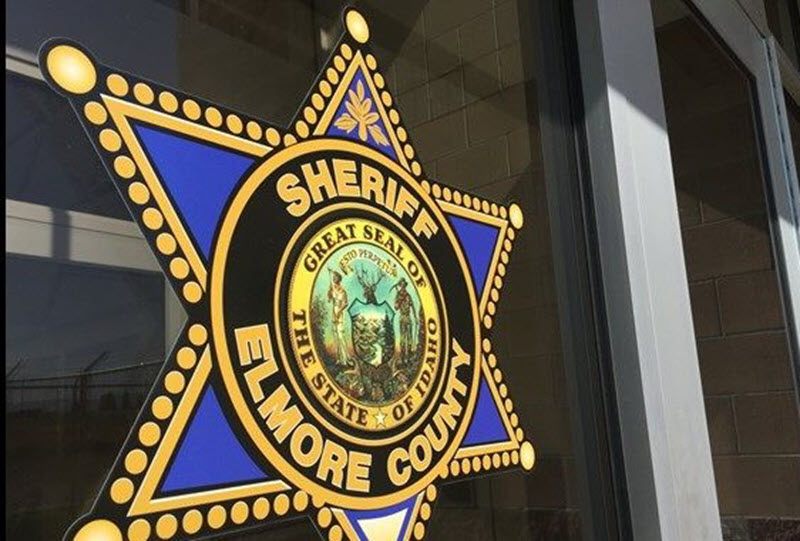
At just over 3,000 square miles, Elmore County is one of the largest in Idaho, but also one of the most remote, meaning radio and wireless communication can sometimes be a struggle.
The local sheriff’s department shares its experience with the FirstNet dedicated public safety broadband network.
by Melissa Delaney
Brazos County, Texas got its first glimpse into the future in 2010. Police Sgt. Josh Hearen attended a demonstration for the nation’s first public safety broadband network in neighboring Harris County, a First Responders Network Authority (FirstNet) Early Builder.
“Josh planted the seed here that maybe we could work off that core antenna and test some of the devices,” recalls Brazos County Sheriff Chris Kirk. Harris County loaned them six devices, and the test proved successful. Within a few years, Brazos County was operating on band class 14 — the public safety spectrum — and continued until November 2017, when Texas opted into FirstNet. “We started the project the week of Thanksgiving,” says Kirk, and they haven’t looked back.
Motorola Solutions’ broadband push-to-talk offering—driven by Kodiak technology acquired in 2017—meets most of the 3GPP standard for mission-critical push to talk (MCPTT), but the lack of available proximity services (ProSe) chipsets remains the biggest hurdle to being fully MCPTT-compliant, according to company official.
SOURCE: Urgent Communications
DATE: April 11, 2019
AT&T recently announced the availability its upgraded Enhanced Push to Talk (EPTT) offering, which was recently showcased during the Winter Institute in College Station, Texas. Powering that service is Kodiak Release 9.0, which includes MCPTT features like emergency calling, remote monitoring and ambient discreet listening, according to Michael Doerk, senior manager for product marketing at Motorola Solutions.
[su_button url=”https://urgentcomm.com/2019/04/11/motorola-solutions-provides-insight-into-companys-progress-on-mcptt-mcdata-mcvideo/” target=”blank” style=”flat” background=”#005a8c” size=”4″ radius=”0″]READ FULL ARTICLE [/su_button]
Learn about current efforts to continue to protect the 4.9 GHz Band for public safety as well as recent filings, key decisions impacting these efforts, and how you can support PSSA’s initiative to protect the 4.9 GHz band for public safety.