Nebraska Selects MCP to Support Statewide NG 9-1-1 System Rollout
The implementation is the next phase of the PSC’s NG 9-1-1 service system plan, adopted by the PSC in 2017 and resulting in Nebraska LB993 signed into law April 4, 2018. The plan provides a comprehensive strategy and holistic approach to transitioning from enhanced 9-1-1 (E9-1-1) technology to NG 9-1-1.
The MCP project team will provide technical assistance during the implementation of the plan. MCP also will help Nebraska realize additional benefits as it deploys NG 9-1-1, including the opportunity to regionalize and share costs and resources, as well as the ability to share operations in real time.
MCP and the Nebraska PSC began working together in 2017 when the commission partnered with the firm to develop a statewide NG 9-1-1 plan. The public-safety answering points (PSAPs) supported by the Nebraska PSC serve nearly 2 million residents and process more than 1 million calls annually.
Would you like to comment on this story? Find our comments system below.
FirstNet Authority board members today voted unanimously to approve a resolution outlining four key principles that will be followed as the board determines how best to reinvest an estimated $15 billion or more during the next two decades to fund the evolution of the FirstNet system being built and maintained by AT&T.
SOURCE: Urgent Communications
DATE: March 21, 2019
Under the FirstNet Authority’s contract with AT&T, AT&T is required to make annual payments to the FirstNet Authority that will total about $18 billion over the 25-year deal. Of this total, $2 billion to $3 billion is expected to be used to support the FirstNet Authority’s organizational operations. The rest of this money—more than $15 billion—is slated to be reinvested into the FirstNet system, as the FirstNet Authority has a statutory requirement to reinvest revenues beyond its operating expenses into the FirstNet system.
FirstNet Authority officials pledged to develop a “roadmap” outlining plans to enhance the FirstNet system. Driven by input from the organization’s outreach efforts with public-safety entities, the roadmap is scheduled to be unveiled later this year.
[su_button url=”https://urgentcomm.com/2019/03/21/firstnet-board-approves-principles-guiding-future-reinvestments-of-15-billion-into-public-safety-broadband-system/” target=”blank” style=”flat” background=”#005a8c” size=”4″ radius=”0″]READ FULL ARTICLE [/su_button]
From law enforcement to hurricanes and even the Super Bowl, Georgia Emergency Management Agency and Homeland Security is relying on smart cities and IoT technology backed up by AT&T’s FirstNet.
SOURCE: techrepublic.com
DATE: March 15, 2019
The state of Georgia is not only relying on AT&T’s first responder network FirstNet for total and immediate coverage during emergency and disaster situations, it is also implementing smart cities and Internet of Things (IoT) solutions across police, fire, ambulance, and emergency management.
According to Georgia Emergency Management Agency (GEMA) and Homeland Security manager of Critical Infrastructure and Key Resource Unit Warren Shepard, Georgia was one of the first adopters of FirstNet back in November 2017, signing a contract in January 2018 before the services were deployed in March last year.
[su_button url=”https://www.techrepublic.com/article/georgia-homeland-security-we-rely-on-iot-and-firstnet-for-emergencies-and-disasters/” target=”blank” style=”flat” background=”#005a8c” size=”4″ radius=”0″]READ FULL ARTICLE [/su_button]
The FirstNet network build-out is helping AT&T to increase its network capacity by about 50% as it adds additional band support while turning up FirstNet’s Band 14 spectrum, according to John Stephens, AT&T’s CFO. Stephens spoke at the the Deutsche Bank Media, Internet and Telecom Conference yesterday.
SOURCE: RCRWireless.com
DATE: March 13, 2019
As AT&T builds out the FirstNet network, he said, it is also adding support for its AWS and Wireless Communications Spectrum holdings, as well as enabling LTE features such as 4×4 multiple-input multiple-output, four component-carrier aggregation and 256 QAM modulation, Stephens said. With those spectrum aggregation capabilities, he went on, the difference is akin to having four single-lane highways compared to one four-lane highway.
[su_button url=”https://www.rcrwireless.com/20190313/carriers/firstnet-is-atts-springboard-to-5g” target=”blank” style=”flat” background=”#005a8c” size=”4″ radius=”0″]READ FULL ARTICLE [/su_button]
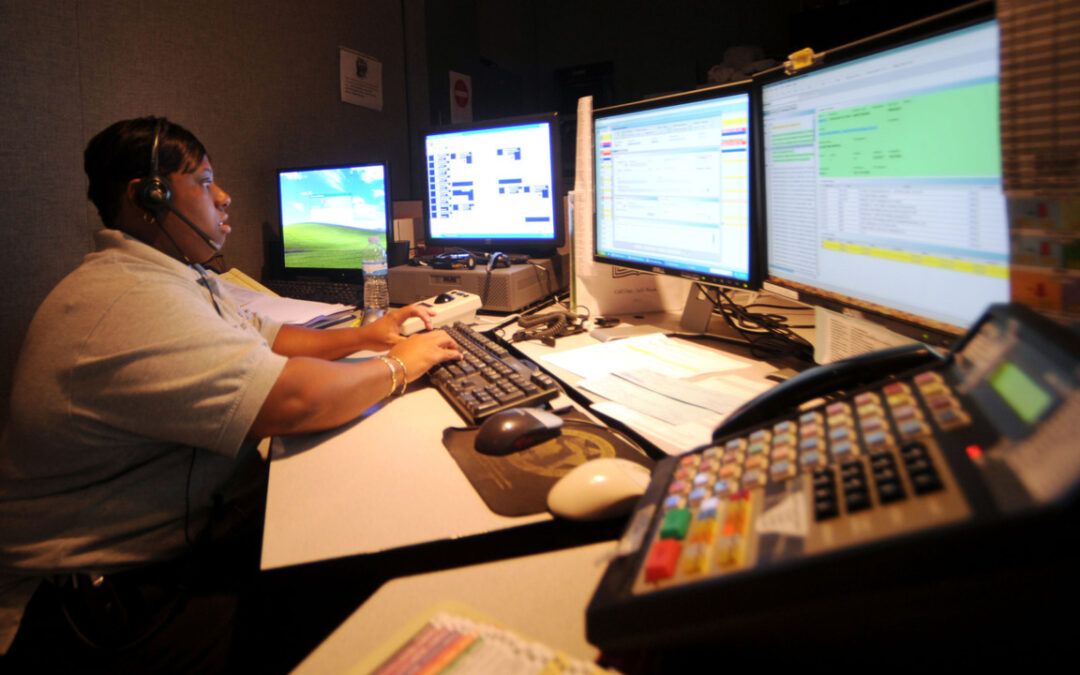
The 911 telecommunicator community received some news last week that undoubtedly buoyed their spirits. A bill was introduced into the U.S. House by Rep. Norma Torres (D-Calif.)—a former telecommunicator—and Rep. Brian Fitzpatrick (R-Pa.)—a former Federal Bureau of Investigation (FBI) special agent and federal prosecutor—that would give telecommunicators (i.e., call-takers and dispatchers) the recognition they richly deserve as an integral component of public safety and emergency response.
SOURCE: Urgent Communications
DATE: March 14, 2019
The 911 Supporting Accurate Views of Emergency Services (SAVES) Act would place telecommunicators under the category of “protective service occupations” in the Office of Management and Budget (OMB) Standard Occupational Classification (SOC) catalog—the category that includes police officers and firefighters. Currently, telecommunicators fall under the category of “office and administrative support occupation,” a classification that includes mail clerks, secretaries, office clerks, typists, meter readers, telephone operators, mail carriers, file clerks, bank tellers, gambling cage workers and the like.
[su_button url=”https://urgentcomm.com/2019/03/14/bill-to-reclassify-911-telecommunicators-is-long-overdue/” target=”blank” style=”flat” background=”#005a8c” size=”4″ radius=”0″]READ FULL ARTICLE [/su_button]
By Wisconsin Department of Military Affairs, Office of Emergency Communications
SOURCE: FirstNet.gov
DATE: March 13, 2019
Every February, 30,000 skiers and spectators descend on northwestern Wisconsin to take part in the largest cross-country race in North America, the American Birkebeiner. The more than 30-mile race from Cable to Hayward, known as the “Birkie,” tests the endurance of skiers. It also creates a huge emergency communications challenge for first responders.
Learn about current efforts to continue to protect the 4.9 GHz Band for public safety as well as recent filings, key decisions impacting these efforts, and how you can support PSSA’s initiative to protect the 4.9 GHz band for public safety.