by AllThingsECC.com | Mar 14, 2024 | Comm Center News
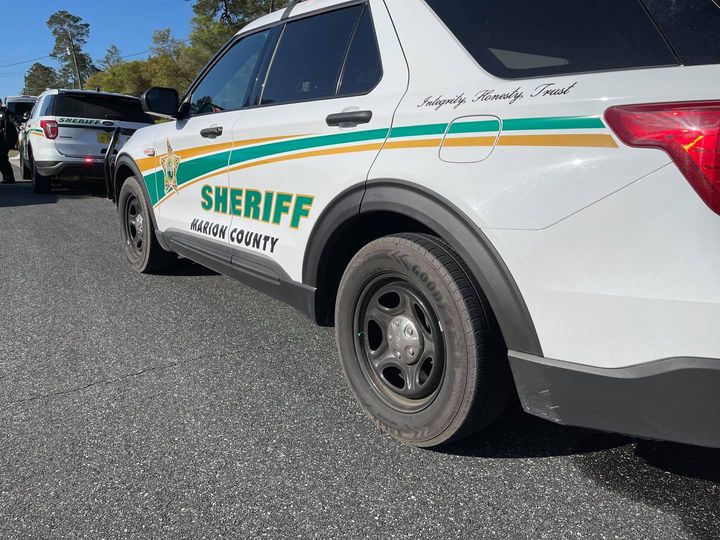
Marion County has a big wish list, one that officials hope voters will help them pay for by approving a 20-year renewal for the penny sales tax in the general election.
Officials have finalized the transportation and public safety projects they hope to accomplish with the $65 million per year that the sales tax is expected to raise. County commissioners wrapped up their planning with a workshop on March 5 to review the complete project list for sheriff, fire, emergency medical services and communications.
If voters approve renewing the sales tax in the November general election, this project list will serve as the general guide for how the revenue will be spent, but it can be adjusted as necessary, said County Administrator Mounir Bouyounes.
All of the project costs are based on the value of today’s dollar and do not include any adjustments to inflation or growth. The projects will be reviewed annually through the budget service to ensure accurate numbers to costs and funding.
Out of the total sales tax revenue of $1.3 billion for the next 20 years, 20% will be devoted to public safety, split between the Marion County Sheriff’s Office and Marion County Fire Rescue. Much of that money will be spent on new vehicles.
“For public safety, we’re going to be replacing vehicles and equipment,” Bouyounes said. “That’s probably going to be the top priority for all of them.”
Over the next 20 years, MCFR will need over $24.8 million to replace 13 engines, 12 grass trucks, one tower, two heavy rescues, 10 tankers and 24 staff vehicles. EMS needs to replace 67 rescue vehicles, which would cost about $30.1 million.
MCSO will need nearly $55 million to replace 48 vehicles for the jail department, 68 vehicles for the regular department, 747 vehicles for the patrol department and three vehicles for the bailiff department.
Other funds will be used to remodel aging facilities and build new ones. Fire rescue needs to remodel Stations 1, 10, 12, 15, 19 and 22, which will cost about $6 million, at $1 million per renovation. Phase 2 of the fire rescue training facility would also be funded by the penny sales tax, and cost $15 million.
EMS will need two new stations, one on the west side and another on the east side of Ocala, costing $5.3 million each. Modular stations will be placed in Pedro, Ocklawaha, Baldwin Ranch and Westport and cost $450,000 each.
“With the new EMS modular stations, those most likely will be also fire stations,” Bouyounessaid. “We are proposing we start with a module arrangement and then we expand them in the future as needed.”
Public safety communication officials need to build towers to replace eight leased towers, which would cost $1 million each. The towers at Forest, Baseline and MCSO all need replacing as they are all over 30 years old, which will cost $500,000 each.
A new animal services center is estimated to cost about $20.4 million.
The sheriff’s facility needs will include major renovations to the jail, including improving the medical area for $2.5 million in addition to new district offices for the patrol division in Marion Oaks, Forest, Shores and the southwest area, costing $4.5 million each.
The sheriff will also need $2.5 million in funding for Phase 2 of its aviation hangar, $2.5 million for a facilities workshop, $5.5 million to expand and renovate the fleet building, $5 million for a new emergency operations warehouse, $5.25 million for a special operations warehouse, $10 million for a new building for operations expansion, and $5 million to repave the sheriff complex.
Funding would also be allocated to purchase a new helicopter for the sheriff’s office, which would cost $4.6 million.
The majority of the other projects that need funding are to purchase new and replace old equipment across all areas of MCSO, MCFR, EMS and communications.
“We just replaced a bunch of our radios for the first responders and the sheriff’s frontline (for emergency operations),” Bouyounes said. “During that 20-year time frame, we’re going to have to replace them again and the estimated cost is about $16.5 million.”
Transportation projects in total will take up 70% of the sales tax revenue, at an estimated cost of $962 million. Notable road projects which the county hopes to partially fund through the sales include the Interstate 75 interchange, a new traffic management center and the bridge replacement at I-75 and County Road 484.
“You have included here on the project list a new traffic management center, which has been discussed a few times in the past,” Bouyounes said. “To start looking at the southwest/northeast corridor, that it’s going to be a huge project for the county to undertake, and I think it will have a major impact on how we move traffic around.”
by AllThingsECC.com | Mar 14, 2024 | Comm Center News
CORDOVA, Alaska (KTUU) – From the East Coast to the Last Frontier, airmen from the Maine National Guard — often referred to as “MAINEiacs” — made the long journey up to Alaska last week to take part in the large-scale disaster response exercise put on by the state alongside the Alaska National Guard.
Two training exercises — known as Alaska EX to the state and Vigilant Guard to the military — tested the response protocols of varying entities in the face of a large natural disaster. The scenario was that a 9.2 earthquake struck Southcentral, triggering a series of aftershocks and tsunamis. Cordova was hit with a 15-foot wave.
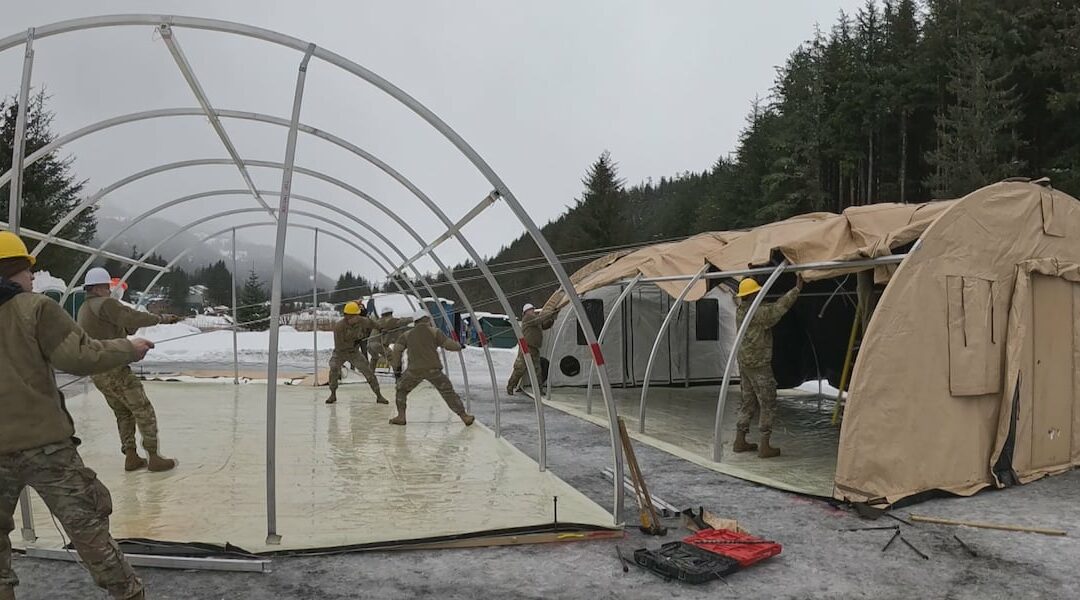
And while the City of Cordova worked to establish an emergency communications center after evacuating its coastline, guardsmen from both Alaska and Maine deployed a Disaster Response Bed-Down Set (DRBS) at a camper park near the city’s center.
The kit is essentially a self-sufficient, fully independent camp for responders who answer the call to action after a disaster occurs. The system breaks down into transportable-sized cubes that can be flown into disaster-stricken areas. Once deployed, the camp has housing, sanitization, and feeding capabilities for response personnel. The idea is to not put an additional burden on a community in need.
Training on the Alaska National Guard’s DRBS was a perfect opportunity for the Maine guardsmen, as their unit is set to be issued one in the near future.
Maine Airman Carly Morrow jumped at the chance to participate after completing basic and technical training just one month prior.
“My sergeant called me and was like, ‘Do you want to go on a mission to Alaska?’ and I was like, ‘I’ll take any opportunities I can get,’” Morrow said. “I’m looking forward to learning as much as I can.”
Senior Master Sgt. Blake Varnell was one of the Alaska-based guardsmen who assisted with their training.
“We brought a seven-personnel crew with us to help train and help guide,” Varnell said. “This is their mission, their exercise, but as you can tell it’s all hands on deck trying to make sure we’ve got everything set up before it gets too dark.”
Dozens of Maine personnel alongside a handful of members from Alaska’s 176th Wing flew to Cordova via a C-17 Globemaster III, wasting no time loading the kit onto flatbed trailers for transport to Odiak Camper Park.
The scaled-down set included three housing tents, generators for electricity, HVAC systems, and an Expandable Single Pallet Expeditionary Kitchen (E-SPEK) — a piece of the DRBS that was a major point of interest for Master Sgt. Douglas Bishoff, who is the superintendent of services for the Maine Air National Guard.
“The E-SPEK is designed so you can take it anywhere in the world, drop it off, and cook within an hour,” Bishoff said. “You can have up to 400-500 meals if you’re serving [Unitized Group Rations].”
According to Bishoff the E-SPEK only takes four people to set up and is a rapid means of providing hot meals, whether to responders or displaced residents.
The collaborative effort between Alaska and Maine took all day to complete, working well after sunset in rainy conditions with temperatures hovering around freezing. After successfully troubleshooting an issue with the E-SPEK’s burners, the guardsmen shared a hot meal cooked in the mobile kitchen before retiring to their cots inside the housing tents.
The following morning, crews broke the kit back down in a fraction of the time it took to set up.
For Senior Master Sgt. Kenneth Brezovsky, it was likely his last training trip before he retires in 2025. Like Varnell, he’s part of the services team whose focus was on the E-SPEK but worked more with the civil engineers to allow the younger generation more hands-on opportunities with the mobile kitchen.
“With my services team I have a lot of young people, and I’m getting done next year so I tried to stay out of that to let them learn without my old knowledge in there,” Brezovsky said. “There’s a lot of new stuff going in the kitchen.”
Brezovsky said the guardsmen benefited from the training exercise and even had suggestions on improving the operation’s effectiveness going forward.
For what could be his last trip with the National Guard, Brezovsky was thrilled that his first time in Alaska was with his fellow guardsmen.
Copyright 2024 KTUU. All rights reserved.
by AllThingsECC.com | Mar 14, 2024 | Comm Center News
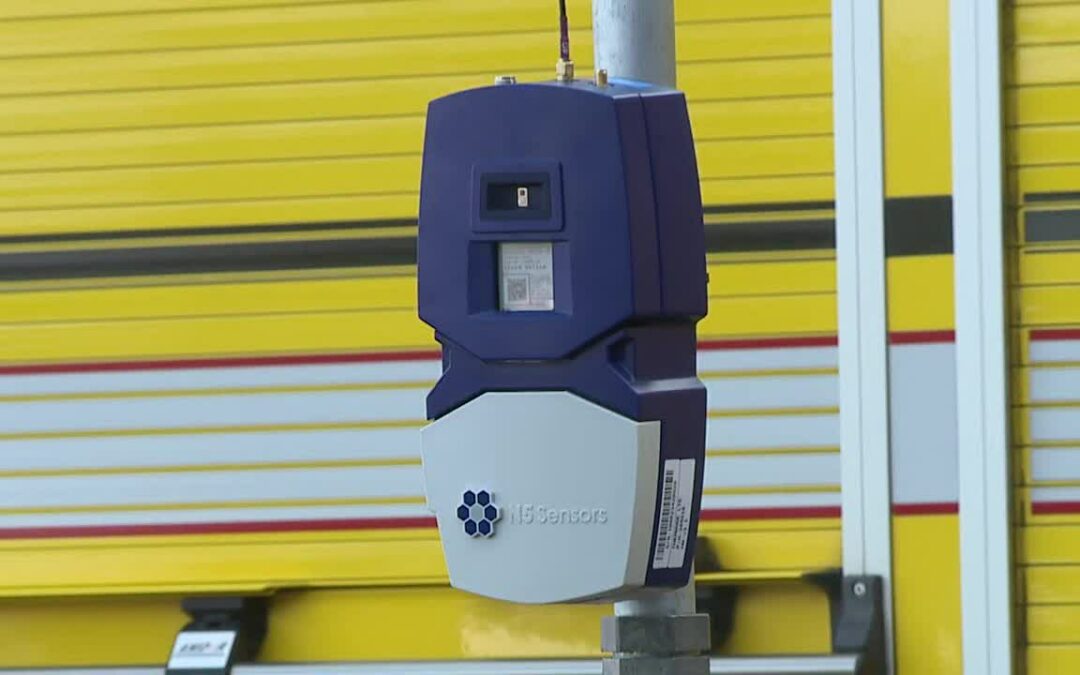
HONOLULU (KHON2) — The state continues to help Maui move forward seven months after the Lahaina wildfires ravaged the westside of the island. HI-EMA, along with other partners, recently announced the planned deployment of fire and wind sensors. HI-EMA Administrator James Barros joined Wake Up 2day to talk about those topics and more.
Here’s more information about the Hawaii Emergency Management Agency, according to its state website:
The Hawaiʻi Emergency Management Agency (HI-EMA) plans for and responds to both natural and human-caused emergencies. These include emergencies resulting from all hazards, from tsunamis, wildfires, and hurricanes to incidents involving hazardous materials or nuclear power. The agency prepares and implements a statewide Comprehensive Emergency Management Plan, and routinely conducts extensive exercises to test state and county emergency response capabilities.
HI-EMA is the coordinating agency on emergencies of all kinds between federal and local agencies, including the four county emergency management agencies – Hawaiʻi County Civil Defense, Maui Emergency Management Agency, City and County of Honolulu Department of Emergency Management, and Kauaʻi Emergency Management Agency – and the Federal Emergency Management Agency (FEMA).
After an incident, HI-EMA conducts damage assessment surveys and advises the Governor on whether to declare an emergency and seek federal relief funds. The agency maintains a primary Emergency Operations Center (EOC) in Diamond Head Crater, Honolulu. HI-EMA also operates State Warning Point, a state emergency communications center staffed 24 hours, 7 days a week. The center maintains statewide communications with county emergency officials and other partners.

by AllThingsECC.com | Mar 14, 2024 | Comm Center News
Recognizing the vital role of Emergency Communications Centers (ECCs) in public safety, the Cybersecurity and Infrastructure Security Agency (CISA), in collaboration with SAFECOM and the National Council of Statewide Interoperability Coordinators (NCSWIC), has unveiled an initiative to empower ECCs across the nation – the 911 Cybersecurity Resource Hub.
Ryan Ford, Federal Facilitator for the Joint SAFECOM/NCSWIC Next Generation 911 (NG911) Working Group at CISA, emphasizes the necessity for ECCs to have access to comprehensive cybersecurity resources.
He acknowledges the challenges faced by ECCs in navigating the plethora of available resources and finding relevant information tailored to their needs. The 911 Cybersecurity Resource Hub serves as a centralized repository, streamlining access to essential resources and expertise.
911 Cybersecurity Resource Hub: A Multifaceted Approach to Cybersecurity
The hub is designed to address the multifaceted cybersecurity needs of ECCs, offering a diverse array of resources sourced from federal agencies, industry partners, academia, and the private sector. From reporting cyber incidents to accessing real-world case studies and educational opportunities, ECCs can find valuable tools and best practices to enhance their cybersecurity posture.
Collaboration has been integral to the development of the Resource Hub. CISA, SAFECOM, and NCSWIC have worked closely with state and local public safety stakeholders, drawing on their insights and expertise to tailor the hub to the unique requirements of ECCs nationwide.
This collaborative approach ensures that the hub remains relevant, responsive, and effective in addressing the evolving cybersecurity challenges faced by ECCs.
Enhancing Critical Infrastructure Resilience
In addition to the 911 Cybersecurity Resource Hub, CISA has been at the forefront of initiatives aimed at enhancing critical infrastructure resilience. The Regional Resiliency Assessment Program (RRAP), launched in partnership with the American Samoa Department of Homeland Security, represents a significant stride towards enhancing the resilience of critical infrastructure.
The RRAP seeks to foster a comprehensive understanding of regional critical infrastructure vulnerabilities and promote actionable measures to mitigate risks. By forging partnerships across federal, state, local, and private sector entities, the RRAP aims to cultivate a collaborative approach to resilience-building, ensuring that critical infrastructure remains robust and resilient in the face of emerging threats.
Amidst ongoing efforts to strengthen cybersecurity and resilience, CISA has unveiled its priorities for the Joint Cyber Defense Collaborative (JCDC). Despite recent scrutiny, the JCDC remains committed to combating evolving cyber threats with renewed vigor. By realigning resources and strategic direction, CISA aims to enhance the effectiveness of the JCDC in safeguarding the nation’s critical assets against cyber threats.
As cybersecurity threats continue to evolve and proliferate, the importance of proactive measures to protect critical infrastructure cannot be overstated. Through initiatives like the Resource Hub, RRAP, and the JCDC, CISA is leading the charge in empowering ECCs and critical infrastructure stakeholders to navigate the complex cybersecurity landscape with confidence and resilience.
In conclusion, the launch of the 911 Cybersecurity Resource Hub marks a significant milestone in the ongoing efforts to strengthen cybersecurity in emergency communications. By providing ECCs with access to comprehensive resources and expertise, CISA, SAFECOM, and NCSWIC are empowering ECCs to safeguard their networks and uphold their critical role in ensuring public safety and resilience.
Media Disclaimer: This report is based on internal and external research obtained through various means. The information provided is for reference purposes only, and users bear full responsibility for their reliance on it. The Cyber Express assumes no liability for the accuracy or consequences of using this information.
by AllThingsECC.com | Mar 14, 2024 | Comm Center News

The annual Kentucky Statewide Tornado Drill is exactly as the name suggests. MetroSafe acts as the emergency communications center for Louisville Metro, handling everything from weather alerts and evacuation orders to warnings about hazardous materials (or people).MetroSafe’s Cody Ashbaugh wants to address the most common misconception: that tornado sirens should be heard indoors.”The number one thing we want people to understand is that sirens are made for outdoor use,” he said. “They are not made to be heard in a basement, through a concrete building.”Instead, the alert system works in tandem with LENSAlert (short for Louisville Emergency Notification System Alert — text “LENSAlert” to 67283 to subscribe to text message notifications) and smartphone notifications to warn the public when necessary.The tests don’t trigger smartphone alerts, but it’s important to ensure the system works as intended, as it can be activated manually or when it detects unusual weather activity that affects one or more of the sirens placed in Louisville Metro or the six nearby counties. “It’s human nature — it’s going to fail at some point,” Ashbaugh said. “We’re going to have that backup in place, no matter what.”He’s referring to MetroSafe’s multiple redundancies—operators can move to other dispatch centers at a moment’s notice, or even access emergency systems remotely (such as from home) thanks to a cloud-based network.MetroSafe is also preparing to test a “Rapid Deployable Siren” that can be placed at events such as Thunder Over Louisville.”We want to make sure that with that amount of people in such a concentrated area that–worst case scenario, in a weather emergency, we’re able to notify everyone,” Ashbaugh said.Thunder’s the perfect test case in a city that is seeing increasing numbers of events—not just Thunder and the Kentucky Derby, but music, beer, and bourbon festivals (and beyond).”When you pack 800,000 people right on the river, you get a lot of things going on at once,” Ashbaugh said. “Some people believe Derby is our busiest day but, in fact, it’s Thunder.”
LOUISVILLE, Ky. —
The annual Kentucky Statewide Tornado Drill is exactly as the name suggests.
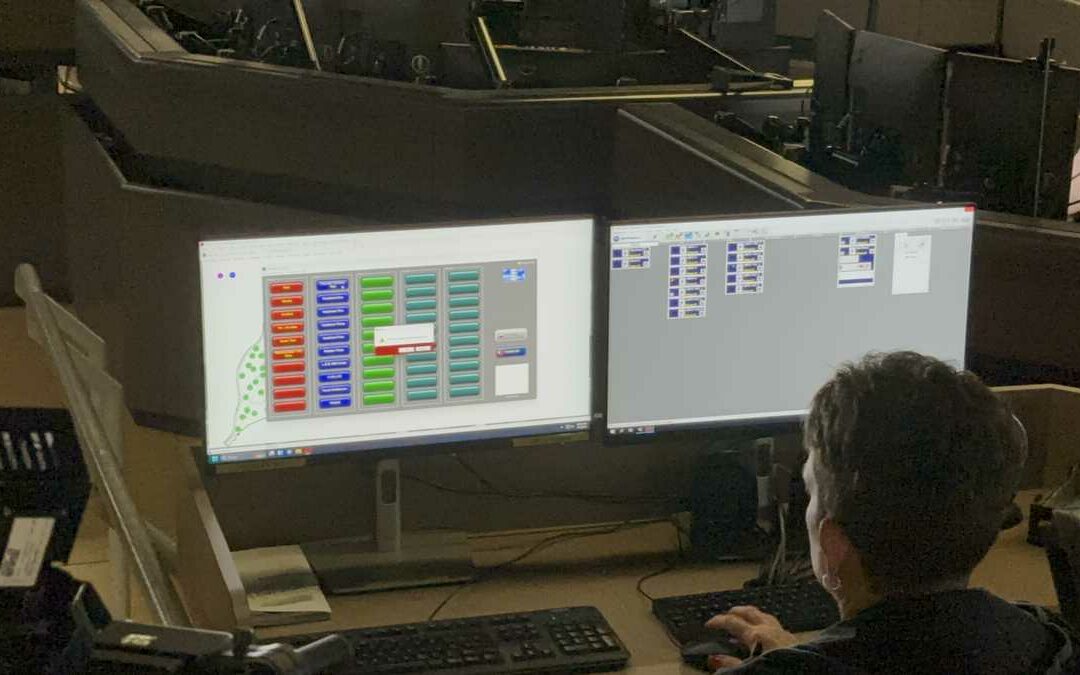
MetroSafe acts as the emergency communications center for Louisville Metro, handling everything from weather alerts and evacuation orders to warnings about hazardous materials (or people).
MetroSafe’s Cody Ashbaugh wants to address the most common misconception: that tornado sirens should be heard indoors.
“The number one thing we want people to understand is that sirens are made for outdoor use,” he said. “They are not made to be heard in a basement, through a concrete building.”
Instead, the alert system works in tandem with LENSAlert (short for Louisville Emergency Notification System Alert — text “LENSAlert” to 67283 to subscribe to text message notifications) and smartphone notifications to warn the public when necessary.
The tests don’t trigger smartphone alerts, but it’s important to ensure the system works as intended, as it can be activated manually or when it detects unusual weather activity that affects one or more of the sirens placed in Louisville Metro or the six nearby counties.
“It’s human nature — it’s going to fail at some point,” Ashbaugh said. “We’re going to have that backup in place, no matter what.”
He’s referring to MetroSafe’s multiple redundancies—operators can move to other dispatch centers at a moment’s notice, or even access emergency systems remotely (such as from home) thanks to a cloud-based network.
MetroSafe is also preparing to test a “Rapid Deployable Siren” that can be placed at events such as Thunder Over Louisville.
“We want to make sure that with that amount of people in such a concentrated area that–worst case scenario, in a weather emergency, we’re able to notify everyone,” Ashbaugh said.
Thunder’s the perfect test case in a city that is seeing increasing numbers of events—not just Thunder and the Kentucky Derby, but music, beer, and bourbon festivals (and beyond).
“When you pack 800,000 people right on the river, you get a lot of things going on at once,” Ashbaugh said. “Some people believe Derby is our busiest day but, in fact, it’s Thunder.”

by AllThingsECC.com | Mar 14, 2024 | Comm Center News
As the increase in drone activity rises, so do the unintended consequences and nefarious uses.
The proposed recommendations outlined in the Unmanned Aircraft Systems (UAS) Detection and Mitigation Systems Aviation Rulemaking Committee (ARC) Final Report, released on Jan. 9 by the Federal Aviation Administration (FAA) in conjunction with over 50 members from all facets of industries, have significant advantages and disadvantages for various industries. These industries include construction, industrial, sporting stadiums, law enforcement, campus security, medical facilities, state prison facilities, energy infrastructure, airports, home security systems, corporate espionage, realtors, air shows, festivals, races, cruise/travel industry, and many more.
Law enforcement agencies and campus security departments are increasingly relying on drones for surveillance and situational awareness. However, the misuse of drones can compromise public safety and violate privacy rights. The recommendations from the proposal can assist law enforcement and campus security personnel in identifying and neutralizing unauthorized drones, ensuring the responsible and lawful use of this technology.
Medical facilities, such as hospitals and clinics and those that have helicopter pads, need to maintain a secure environment to protect patient privacy and ensure the smooth operation of healthcare services. Drone interference can disrupt the need for expedient transport of patients from airborne medical transport, sensitive medical equipment, or compromise patient confidentiality. By implementing the proposed detection, medical facilities can safeguard their operations and provide uninterrupted care to patients.
Sporting stadiums, known for hosting large gatherings of people, need to prioritize security. Drones flying over stadiums, violating temporary flight restrictions (TFRs), can not only disrupt the event but also pose a safety risk to spectators. The implementation of detection and systems can aid in identifying unauthorized drones and taking appropriate action to protect the safety and enjoyment of attendees.
State prison facilities face unique challenges when it comes to drone interference. Unauthorized drones can be used to deliver contraband or aid in escape attempts. Since geofencing only outlines immediate boundaries of specific buildings, detection systems are a must to help prison authorities detect and neutralize drones, thereby enhancing the security of these facilities.
In the construction industry, the use of drones has become increasingly popular for surveying, monitoring construction sites, and capturing aerial footage for marketing purposes. However, without proper detection, unauthorized drones can pose a threat to worker safety, project security, and the integrity of the construction site. Some construction companies have outright banned any use of drones by company personnel and contract with third-party companies. Implementing the recommendations from this proposal can help ensure the safe and secure operation of drones in construction zones.
Similarly, industrial facilities face risks from unauthorized drone activity. These facilities often contain sensitive equipment, hazardous materials, or critical infrastructure that could be targeted by malicious drone operators. By adopting the proposed detection and possible mitigation systems if approved by the FCC, industrial facilities can enhance their security measures and mitigate potential risks and threats.
Energy infrastructure, including power plants and oil refineries, is critical to the functioning of modern society which is why they are classified as ‘critical infrastructure.’ Drones can pose a significant risk to such facilities, either through intentional attacks or accidental interference. The adoption of detection and FCC-approved mitigation systems can bolster the security measures already in place and protect these vital assets from potential threats.
Airports, being hubs of transportation, are vulnerable to drone activity. Unauthorized drones near airports can disrupt air traffic, endangering the safety of passengers and crew. By implementing the recommendations from the proposal, airports can enhance their existing security protocols and ensure the safe operation of flights.
Home security systems, designed to protect residences and personal property, can be enhanced with drone detection systems. These systems can help homeowners identify and respond to unauthorized drones, ensuring the safety and privacy of their homes.
Corporate espionage is a growing concern for businesses across various industries. Drones equipped with cameras and advanced surveillance capabilities can be used to gather sensitive information or conduct unauthorized reconnaissance. The adoption of detection systems can help organizations protect their intellectual property and maintain their competitive advantage.
Realtors, who often rely on aerial photography and videography for property listings, can benefit from the implementation of drone detection systems. Unauthorized drones flying near properties can compromise the privacy of homeowners and potential buyers. By adopting the proposed systems, realtors can ensure a secure and uninterrupted environment for property viewings.
Air shows, festivals, and races are popular events that attract large crowds. The presence of unauthorized drones can not only disrupt these events but also pose a safety risk to participants and spectators. Implementing the recommendations from the proposal can help event organizers maintain controlled airspace and ensure the safety of everyone involved.
The cruise and travel industry, which relies on the smooth operation of ports and terminals, can face disruptions from unauthorized drone activity. Drones flying near cruise ships or passenger terminals can create safety hazards and logistical challenges. By implementing the proposed detection systems, the cruise and travel industry can enhance their security measures and provide a safe and enjoyable experience for passengers.
In conclusion, the recommendations from the UAS Detection and FCC Mitigation Systems ARC Final Report have far-reaching advantages and disadvantages for various industries. By adopting the proposed detection and FCC-approved mitigation systems, these industries can enhance their security measures, protect their assets, and ensure the safety and privacy of their operations and stakeholders.
Greg MacMaster is a former Michigan State Representative and was part of the formation of the UAS Task Force. At the height of when drones were starting to become a frequent occurrence over prisons, he was the Chairman of the Michigan Department of Corrections from 2013-2014. MacMaster is also the president of Eagle Eye Media, Drone Sky Defender.
Note: The views expressed by guest bloggers and contributors are those of the authors and do not necessarily represent the views of, and should not be attributed to, Campus Safety.
If you appreciated this article and want to receive more valuable industry content like this, click here to sign up for our FREE digital newsletters!