by AllThingsECC.com | Nov 5, 2021 | Articles, Comm Center News
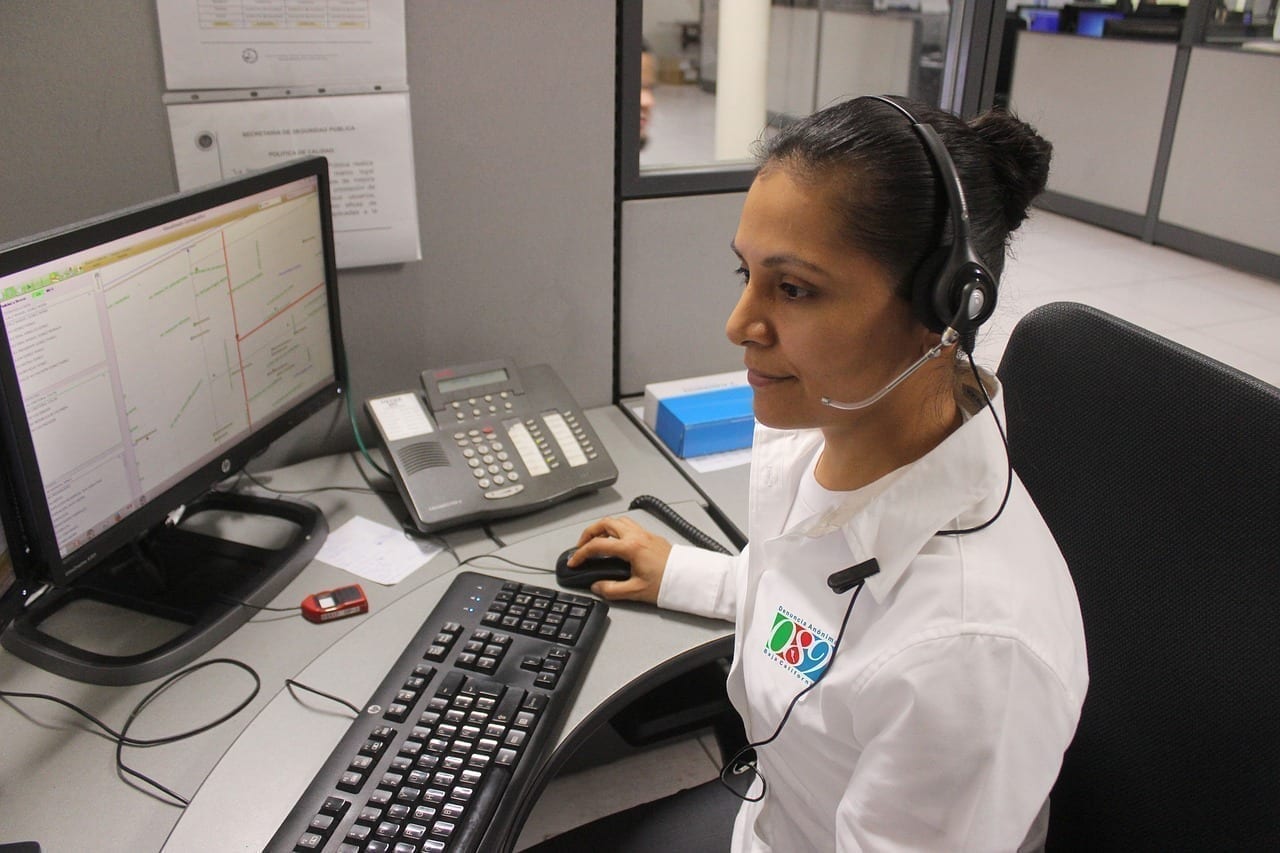
While most U.S. emergency communications centers (ECCs) use a CAD system to dispatch 911 calls and facilitate records management, few CAD system components are uniform across vendors. This can create problems transferring emergency calls and associated data, such as caller location information.
It can also create problems with the transfer of call information to first responders in the field via public safety broadband networks. These transfer functions are important capabilities for enhancing responder safety and situational awareness and is essential for the transition to Next Generation 911 (NG911) functionality…
by AllThingsECC.com | Nov 4, 2021 | Articles, Comm Center News
During a mass shooting, the ECC will be overwhelmed with calls. There will be calls from persons involved in the incident, friends and family of those affected, and potentially the shooter. The telecommunicator must process calls quickly to obtain as much information as possible.
Everyone knows the most crucial piece of information in any call is the location. For mass shootings, this means more than just the location of the incident. Responders need to know the exact location of the shooter. Obtain location within locations. If the caller indicates the shooter is in the breakroom, ask where the breakroom is inside the building. An updated location of the shooter is also essential. As officers enter the location, they need to know where the shooter is in the building…
by AllThingsECC.com | Nov 4, 2021 | Articles, Comm Center News
4.9 GHz
As many are aware, last year the Federal Communications Commission (FCC) decided public safety was not making sufficient use of the 50 MHz of spectrum in the 4.9-GHz band the Commission had made available to the public-safety community for Wi-Fi-type services starting in 2002.
The FCC’s idea was to assign the spectrum to each state and each state could then award a master lease for the spectrum. The successful leaseholder would then be able to determine how the spectrum would be used within that state, and supposedly protect existing public-safety users of the spectrum.
The Public Safety Spectrum Alliance (PSSA) filed a number of comments and then filed a request for stay to prevent the FCC from moving forward with its intended plan. In 2021, the new FCC implemented the stay order and to a limited extent, began permitting public safety to once again license systems for use in the 4.9-GHz band…
by AllThingsECC.com | Nov 3, 2021 | Articles, Comm Center News
By Margaret Gutierrez, National Tribal Government Liaison, First Responder Network Authority
Twenty years ago, the 9/11 terrorist attacks on our nation revealed fundamental problems with our emergency communications systems. Police officers, firefighters, and paramedics could not communicate across radio systems, and cell towers were congested with commercial usage. First responders’ inability to communicate on that fateful day underscored significant public safety communication shortfalls nationwide – including on tribal lands. READ FULL ARTICLE
by AllThingsECC.com | Nov 2, 2021 | Articles, Comm Center News
A unique public-private partnership provides broadband for public safety services and for rural areas that have been traditionally underserved or unserved.
By Mark L. Ryckman, ICMA-CM; and Kenzie Capece | Nov 01, 2021 | PM MAGAZINE
For the first time, public safety has a nationwide broadband network it can call its own. Known as FirstNet, the network is built through a public-private partnership between the federal government and the global telecommunications carrier AT&T. Overseen by the First Responder Network Authority (FirstNet Authority), a federal government entity, this nationwide broadband network is revolutionizing the delivery of public safety services. READ FULL ARTICLE
by AllThingsECC.com | Nov 1, 2021 | Articles, Comm Center News
About 95% of once-proposed federal funding to accelerate next-generation-911 (NG911) deployment nationwide was eliminated from the text of the $1.75 trillion reconciliation bill that was released yesterday, although the $500 million included still would be the largest federal 911 investment in history.
Reconciliation-bill text calls for $470 million to fund a nationwide NG911 grant program that could be used to plan, deploy, implement and maintain IP-based next-generation platforms, as well as fund training of personnel. The proposal also includes $20 million for administrative costs, $9 million to establish a new NG911 cybersecurity center, and $1 million to establish a 16-member Public Safety Next Generation 911 Advisory Board to provide recommendations to the NTIA assistant secretary administering the program…