By Wisconsin Department of Military Affairs, Office of Emergency Communications
SOURCE: FirstNet.gov
DATE: March 13, 2019
Every February, 30,000 skiers and spectators descend on northwestern Wisconsin to take part in the largest cross-country race in North America, the American Birkebeiner. The more than 30-mile race from Cable to Hayward, known as the “Birkie,” tests the endurance of skiers. It also creates a huge emergency communications challenge for first responders.
”We’re seeing lives being saved on a scale that we’ve never even dreamed,” said the president of the National Emergency Number Association
SOURCE: nbcsandiego.com
DATE: March 11, 2019
The state of California will overhaul all of its emergency call centers with a new technology in hopes of improving its location accuracy and situational awareness.
RapidDeploy is a new, cloud-based system that will improve location accuracy and natural disaster awareness for responders with live data feeds for fires, earthquakes, flooding, traffic, and incidents.
The California Office of Emergency Services (Cal OES) confirmed Monday it awarded a contract to RapidDeploy to install this technology across all 440 California 911 call centers will be updated with this technology.
[su_button url=”https://www.nbcsandiego.com/news/local/911-call-center-state-update-rapiddeploy-cal-oes-responders-location-accuracy-fcc-506994881.html” target=”blank” style=”flat” background=”#005a8c” size=”4″ radius=”0″]READ FULL ARTICLE [/su_button]
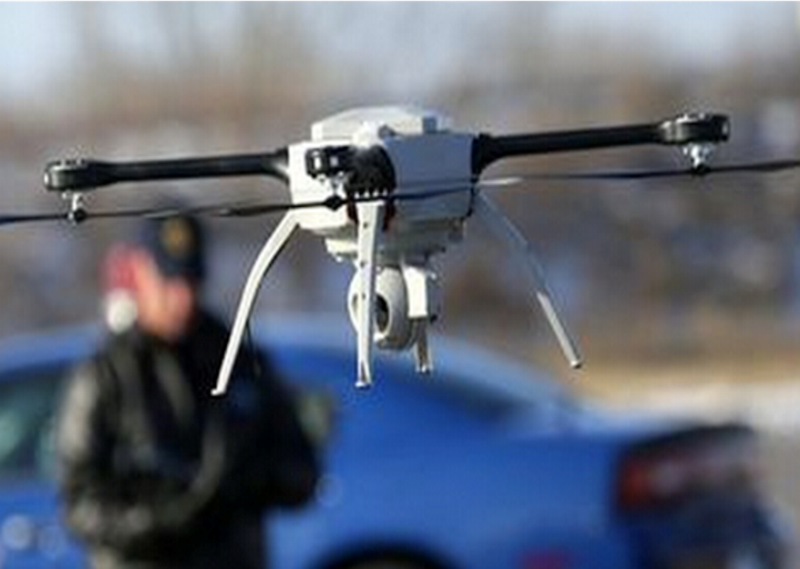
Fortunately, more and more agencies are starting to embrace unmanned aerial systems technology (drones) by first responders
By Christopher Vondracek
Everywhere veteran firefighter Charles Werner
travels, he hears about drones. He
recently attended a Texas convention for public safety officers where some
drone operators told him they practically had to sneak out of work because they
are so in-demand.
Werner, who now serves as the Chief of Public Safety for DroneUp,
an Unmanned Aerial System (UAS) facilitator for commercial and government uses,
stated, “It’s really not about the drone, but about the data that comes from it.”
Werner rattled off a list of situations where public safety
officers are better equipped to provide assistance on-scene, thanks to a drone:
search-and-rescue from the California desert to the volcanoes in Hawaii, where
drones can capture data about fissure movement and lava flows, to the floods in
Texas or Florida-where a burst or overrun dam can be monitored.
Fortunately, more and more agencies are starting to embrace unmanned aerial systems technology (drones) by first responders. With the addition of FirstNet and its first-responder-dedicated communications network, Werner, a 40-year fire department veteran who served for ten years as fire chief of Charlottesville, Virginia, stated the moment for takeoff is now.
“Any public safety agency that doesn’t have a drone or drone
program is negligent in my opinion,” said Werner. He described a taste-and-see approach many
local departments take to technology that can excite and incite fears for
public overreach. “Most of these agencies go in and start small and they do it
just for themselves, but as soon as they start having some successful missions,
others want to be involved, too.”
FirstNet’s extra layer of spectrum can provide the data capacity
for drone operators to send data that it gets up in the air back down to earth.
That doesn’t only mean streaming video but also sensory data, such as heat maps
or C02 levels. This data can be vital for the folks on the ground. Werner has
watched up-close how a city can change its perspective on drones. The City of
Charlottesville, where he spent the first 37 years of his 40-year career, was
the first so-called “no drone” city in the country, after the city council
voted to ban UAVs. (A state law later overturned that decision.)
During the violent clashes at the Unite the Right white supremacist
rally in the city in the summer of 2017, a camera strapped to a drone captured
a still image of the moment an assailant’s car struck Heather Heyer. She later died of her injuries. The image, as well as other data, provided
conclusive evidence for a jury to convict the driver, James Alex Fields, of
first-degree murder.
Werner understands the civil liberty concerns, saying that in his
conversations with the ACLU, the need for rules around the storage of data was
privileged. The ACLU told him, “We don’t
care about drones being able to read license plates, we don’t really care about
traffic cameras, what we care about most is the data and how long you store it.
If in three days of a week, you haven’t found anything and write over it, then
that’s fine. But if it’s longer, you need to have the justification written
down in a policy.”
When Werner looks at the new opportunities created by the FirstNet
platform, with its range of spectrum and priority, and-preemption capabilities
for participating first responders, he said the range of opportunities will be
expansive for local agencies.
“Any kind of data is assisted,” said Werner. “You might be doing a
hazmat mark-up and using Flir imagery and without a strong network, you may
have an integrity issue. You need to be
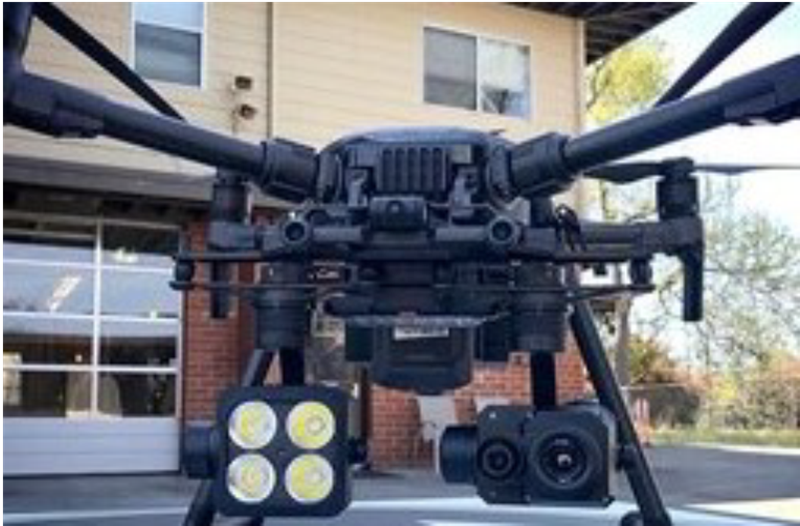
ready for everything. For zoom and infrared, and maybe a catch-and-release for
a flotation device. In short, these operators are flying more than they thought
they would and it’s putting more stress on the network. That’s why
communications are key.”
Werner suggested agencies thinking about purchasing drones
consider teaming up with other agencies in a community or across a region to,
in his words, “spread the burden.” And if Werner’s experience in the
commonwealth is any indication, the rest of the country is seeing a rapid
expansion in this useful technology.
“In Virginia, two years ago there were only two public safety agencies with drones,” said Werner. “Today, that’s advanced to nearly fifty.”
Christopher Vondracek is a
freelance journalist living in Washington D.C., most recently with Courthouse News.
Heat-seeking drones helped reassure searchers that they hadn’t overlooked anyone in the aftermath of the twister that killed 23 people
This 2018 photo provided by the Menlo Fire UAS
SOURCE: firerescue1.com
DATE: March 7, 2019
Rescue crews didn’t have to stumble through every destroyed building in their search for victims after a tornado ravaged a corner of Alabama this week: They used heat-seeking drones to let them know whether there was anyone beneath the ruins.
In so doing, they joined the increasing ranks of public safety agencies across the U.S. and around the world that have employed unmanned thermal-imaging aircraft during critical situations, including manhunts, wildfires and other natural disasters.
In tornado-stricken Alabama, Lee County Sheriff Jay Jones said Tuesday it was not clear if drones spotted any bodies or anyone injured or trapped in the debris. But at the least, they helped reassure searchers that they hadn’t overlooked anyone in the aftermath of the twister that killed 23 people.
[su_button url=”https://www.firerescue1.com/fire-products/drones/articles/393624018-First-responders-use-heat-seeking-drones-in-deadly-tornado-aftermath/” target=”blank” style=”flat” background=”#005a8c” size=”4″ radius=”0″]READ FULL ARTICLE [/su_button]
When it comes to emergency communications in the National Capital Region, Dave Mulholland has seen it all. Originally a member of the U.S. Park Police, Mulholland later took on the role of Statewide Communications Interoperability Coordinator (SWIC) for the District of Columbia where, among other duties, he helped plan and manage emergency communications for large-scale events in the nation’s capital. Today, he serves as the Administrator for the Arlington County (Va.) Emergency Communications Center, which supports more than 225,000 residents and handles upwards of 440,000 calls every year. Public Safety Advocacy Director Dave Buchanan recently sat down with him to discuss his experiences with public safety communications in the National Capital Region for the Public Safety First podcast.
Learn about current efforts to continue to protect the 4.9 GHz Band for public safety as well as recent filings, key decisions impacting these efforts, and how you can support PSSA’s initiative to protect the 4.9 GHz band for public safety.