by AllThingsECC.com | Feb 27, 2018 | Comm Center News
SOURCE: Mission Critical Communications
DATE: February 26, 2018
In speaking with state and local 9-1-1 agencies, the U.S. Government Accountability Office (GAO) identified funding, evolving technology and operations, and governance as major challenges for implementing next generation 9-1-1.
[su_button url=”https://www.rrmediagroup.com/News/NewsDetails/NewsID/16572″ target=”blank”]READ FULL ARTICLE[/su_button]
by AllThingsECC.com | Feb 21, 2018 | Comm Center News
FCC Commissioner Michael O’Rielly sends a letter to the governors of New York, Oklahoma, Missouri, Montana, Puerto Rico, the Northern Mariana Islands and Guam, criticizing those governments for not responding to the FCC’s request to report on 911 deployments and whether they diverted 911 fees for non-911 uses.
O’Rielly noted that the FCC provides the self-reported 911 information from states and territories to Congress, which “has the important job of determining what policies may be needed to ensure that sufficient funds are provided for 911 services.”
“Unfortunately, seven states and territories failed to provide the FCC with this needed information. Today’s letter calls on these states and territories to immediately rectify this issue,” O’Rielly said in a prepared statement. “The diversion of 9-1-1 fees can lead to understaffed calling centers, longer wait times in an emergency, or the inability to upgrade to next generation systems. This is of critical significance to public safety, and simply ignoring the Commission’s inquiry can no longer be an option.”
States’ diversion of 911 fees—often referenced as 911 fund “raiding” —that typically are collected through phone bills has long been a source of concern within the U.S. emergency-calling community. In some state, these funds are used to pay for other public-safety-related expenses; in other states, the money has been used to support the state government’s general fund, particularly during cycles when states face cycles that make it difficult to produce a balanced budget.
Earlier this month, the FCC released its annual report about 911, noting that five states—Illinois, New Jersey, New Mexico, Rhode Island and West Virginia—self-reported that they diverted $128.9 million in 911 fees for other purposes. The FCC report added New York to the list, noting that there was enough evidence of 911 fee diversion in the state to reach this conclusion.
[su_button url=”http://urgentcomm.com/fcc/fcc-commissioner-o-rielly-calls-governors-provide-911-fee-diversion-information” target=”blank”]READ FULL ARTICLE[/su_button]
by AllThingsECC.com | Feb 16, 2018 | Comm Center News
Device-based hybrid solutions that utilize Wi-Fi and Bluetooth signals appear to be the most promising to help locate people using a cell phone to call 911 from inside buildings within dense urban environments, according to initial results from the 911 Location Technologies Test Bed.
Device-based hybrid solutions that utilize Wi-Fi and Bluetooth signals appear to be the most promising to help locate people using a cell phone to call 911 from inside buildings within dense urban environments, according to initial results from the 911 Location Technologies Test Bed.
Matthew Gerst, CTIA’s assistant vice president of regulatory affairs, said the first two stages of testing have been completed at independent test beds in Atlanta and San Francisco. The test-bed program was established after the FCC approved rules in 2015 that created benchmarks for locating 911 callers using wireless devices indoors, as well as outdoors.
“Existing technologies that we’re using today—like GPS and other network-based technologies—performed well indoors in urban, surburban and rural areas,” Gerst said during an interview with IWCE’s Urgent Communications. “But they’re challenged indoors in dense urban areas, and that’s where we saw this device-based hybrid solution hold the most promise for improving indoor location accuracy.”
Stage 1 of the test-bed program examined the performance of carriers’ existing location technologies, Gerst said.
“One of the things that the carriers tested in Stage 1 was the idea of a device-based hybrid solution,” he said. “If the handset has its own location-information capabilities—scanning for Wi-Fi access points, for example—the carriers want to utilize that information for 911. They’re already starting to begin to use that in their networks.
Stage 2 of the program included testing of location technologies that exist today outside of carrier networks, such as dedicated 911 solutions, Gerst said.
Stage 3 is “more about looking at these smaller-scale, localized deployment solutions to make sure that we’re not leaving any stone unturned as we look for location technologies that could be used for 911,” Gerst said, noting that the goal is “to see if they can be scaled up to be used for 911 nationally.”
[su_button url=”http://urgentcomm.com/ng-911/911-location-accuracy-program-set-third-stage-z-axis-testing-expected-begin-later-year” target=”blank”]READ FULL ARTICLE[/su_button]
by AllThingsECC.com | Feb 10, 2018 | Comm Center News
U.S. House members approves an amendment to Kari’s Law legislation—a measure that would require direct dialing for 911 calls made on multi-line telephone systems (MLTS) frequently used by hotels, offices and other enterprises—that awaits President Donald Trump’s signature to become law.
Happy birthday, Kari.
U.S. House members early this morning unanimously approved an amendment to Kari’s Law legislation—a measure that would require direct dialing for 911 calls made on multi-line telephone systems (MLTS) frequently used by hotels, offices and other enterprises—that awaits President Donald Trump’s signature to become law.
The late Kari Hunt—the namesake of the legislation—would have celebrated her 36th birthday today.
House members executed a voice vote on the amendment during early-morning proceedings that were conducted as the legislative body deliberated over a budget deal to end a short-lived government shutdown. The amendment to alter the effective date of the legislation was introduced early this week by Sen. Amy Klobuchar (D-Minn.) when the Senate unanimously approved H.R. 582, the Kari’s Law bill sponsored by Rep. Louis Gohmert (R-Texas).
Although the House passed H.R. 582 more than a year ago, it had to approve the Senate amendment to send the Kari’s Law measure to President Donald Trump, who is expected to sign the legislation into law. Sources close to the situation were unsure of the timetable for the signing to occur.
The legislation would mandate that 911 callers be able to dial the emergency number directly, instead of having to include an additional number or code. On some MLTS, callers must dial an additional number—often “9”—to get an outside line to make a normal phone call, so a 911 call would require the caller to dial “9-911.”
[su_button url=”http://urgentcomm.com/legislation/house-passes-kari-s-law-amendment-legislation-sent-president-trump-final-signature” target=”blank”]READ FULL ARTICLE[/su_button]
by AllThingsECC.com | Feb 2, 2018 | Comm Center News
SOURCE: Mission Critical Communications
DATE: February 2, 2018
An email from the president of the Association of Public-Safety Communications Officials (APCO) International to its members highlighted the association’s efforts to modernize 9-1-1 and ensure that equipment and services are interoperable. The email also suggested steps members can take to improve next-generation 9-1-1 (NG 9-1-1) interoperability.
[su_button url=”https://www.rrmediagroup.com/News/NewsDetails/NewsID/16482″ target=”blank”]READ FULL ARTICLE[/su_button]
![Hancock County’s smallest cities receive help as dispatch fees increase]()
by AllThingsECC.com | Feb 2, 2018 | Comm Center News
Four Hancock County cities will receive a break on their 2018-19 communications allocations.
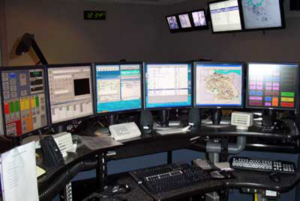
The Hancock County Board of Supervisors on Monday unanimously voted to reduce the charge for county dispatch services for Corwith, Crystal Lake, Goodell and Woden — cities with populations under 500 — by 60 percent, or $11,928.42, total.
The county board decided to revert the four cities back to paying the 2016-17 rate of 15 percent of the total communications budget, while the cities of Britt, Garner, Kanawha and Klemme will remain at the 2018-19 rate of 37.5 percent.
“I’m not saying this is the greatest or wonderfulest thing I’ve ever seen in my life,” said Jerry Tlach, county board chairman. “It was a way to start at least.”
[su_button url=”http://globegazette.com/news/local/hancock-county-s-smallest-cities-receive-help-as-dispatch-fees/article_1b0af118-53a0-5db7-beb3-0b1c2623cb83.html” target=”blank”]READ FULL ARTICLE[/su_button]