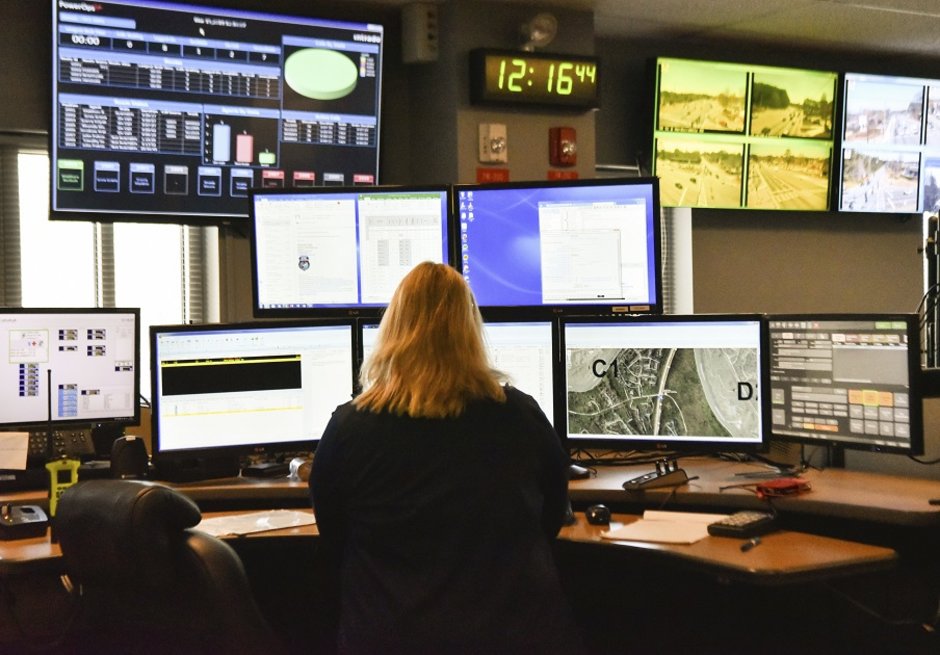
The 9-1-1 professionals who answer these calls are hard-working,
dedicated public servants. They are super-multi-taskers who ensure the
rapid, safe arrival of field responders, and so much more. On any given
day, they may be called upon to provide medical instructions to save
people from choking and heart attacks. They help people on the verge of
suicide get the help they need. They analyze the stress in a caller’s
tone of voice and background noises to assess situations they cannot
see. They coordinate the activities of police, fire and
emergency-medical crews dealing with active shooters and other
potentially-deadly hazards on the scene.
A new law is going to make it easier for people to get emergency help. Kari’s Law Will require direct 9-1-1 dialing without the need to dial extra digits.
Kari’s law will make sure that people don’t have
to dial a number to dial out when they are calling 9-1-1 in an
emergency. But the law only applies to multi-line phones installed or
manufactured *after February 2020.
A Lorain County dispatcher found himself on the other end of a 911
call Monday after his wife delivered a baby on their bathroom floor.
Sarah Davis suddenly went into labor at their house and
quickly realized that there wouldn’t be enough time to get to the
hospital, even though it was only three minutes away.
She said there wasn’t even time to call 911 before the baby
was born, so her husband Mike used his dispatcher training to get
through the basics.
“We always joked about him delivering the baby because he
had the training,” Sarah said. “… It was so fast; there was no time to
freak out.”
After the baby boy was born, Mike called dispatch and spoke
with a friend of his to get him through the next steps. Sarah said she
noticed that was when it sank in for him and he panicked a bit.
OTTAWA COUNTY — For those who work as 911 operators, it’s
not a matter of if they’re going to hear something traumatic, but when.
“Not
everybody can do this job,” said Megan Ross, who works as a dispatcher
for Ottawa County. “Some people can, some people can’t, and there’s no
middle ground. When we pick up the phone, we don’t know what we’re going
to get.”
Ross has spent the last 16 years working for
Ottawa County Central Dispatch, acting as the very first responder in
countless emergencies. She said when you’re taking hundreds of calls a
day like that, resilience is the key to being good at the job.
But
about eight years ago, Ross responded to a call where an officer was
killed in the line of duty, and that affected her in ways she had never
planned for.
“It tore me up,” she said. “I went into a
real nasty time. I was never suicidal, but I went into a real bad space
where I was questioning everything I did on
BY DEVIN DELY, HOLLAND SENTINEL, MICH. / AUGUST 2, 2019
(TNS) — For those who work as 911 operators, it’s not a matter of if they’re going to hear something traumatic, but when.
“Not everybody can do this job,” said Megan Ross, who works as a dispatcher for Ottawa County. “Some people can, some people can’t, and there’s no middle ground. When we pick up the phone, we don’t know what we’re going to get.”
Ross has spent the last 16 years working for Ottawa County Central Dispatch, acting as the very first responder in countless emergencies. She said when you’re taking hundreds of calls a day like that, resilience is the key to being good at the job.
But about eight years ago, Ross responded to a call where an officer was killed in the line of duty, and that affected her in ways she had never planned for.
“It tore me up,” she said. “I went into a real nasty time. I was never suicidal, but I went into a real bad space where I was questioning everything I did on the job. It was a constant fear of something happening again, and it was a terrifying place to be in.”
About five years after the incident, Ross sat down with her boss to discuss her experience.
The FCC adopted rules to help ensure that people who call 9-1-1 from multi-line telephone systems (MLTS) — which commonly serve hotels, office buildings, and campuses — can reach 9-1-1 and be quickly located by first responders. The new rules will also improve emergency response for people who call 9-1-1 from other calling platforms.
The policy implements two laws enacted last year that are designed to strengthen emergency calling. Kari’s Law, requires MLTS equipment to enable users to dial 9-1-1 directly, without having to dial a prefix such as a “9” to reach an outside line. Kari’s Law also requires MTLS to provide notification, such as to a front desk or security office, when a 9-1-1 call is made in order to facilitate building entry by first responders.
Second, Section 506 of RAY BAUM’S Act requires the FCC to consider adopting rules to ensure that “dispatchable location” information, such as the street address, floor level and room number of a 9-1-1 caller, is conveyed with 9-1-1 calls, regardless of the technological platform used, so that first responders can be quickly dispatched to the caller’s location. The new rules apply dispatchable location requirements to MLTS, fixed telephone service, interconnected VoIP services, Telecommunications Relay Services and mobile texting services. Mobile wireless services are already required to provide either dispatchable or coordinate-based location information with 9-1-1 calls.
In addition, the commission consolidated its 9-1-1 rules from multiple rule parts into a single rule part, making it easier for stakeholders, such as service providers and emergency management officials, to more easily ascertain 9-1-1 requirements.
FCC Commissioners Jessica Rosenworcel and Geoffrey Starks approved the rules in part and dissented in part. Rosenworcel said the MLTS rules don’t go far enough because they don’t require businesses already operating a MLTS to change their systems. The rules kick in for MLTS equipment beginning in February 2020.
“So I dissent in part because we do not adopt any requirements for enterprises to inform callers about the 9-1-1 limits of their phone systems, because we do not provide any guidance about when upgrades to existing phone systems will trigger the rules we adopt today, and because we exempt the embedded base of millions of MLTS from complying with location requirements,” she said.
Would you like to comment on this story? Find our comments system below.
Learn about current efforts to continue to protect the 4.9 GHz Band for public safety as well as recent filings, key decisions impacting these efforts, and how you can support PSSA’s initiative to protect the 4.9 GHz band for public safety.