by AllThingsECC.com | Jul 25, 2021 | Comm Center News
Escambia County will now default to using a different primary medical helicopter company in what county officials say is an attempt to get the best, quickest service to residents, but the competitor who has been bumped down the call list is worried that will have the opposite impact.
The Escambia County Commission unanimously passed a “first call agreement” with ShandsCair as its preferred provider at Thursday’s meeting. Under the agreement, county dispatch will send all calls to ShandsCair’s dispatch center, and ShandsCair will determine which medical transportation company has the closest available helicopter to respond to the call…

by AllThingsECC.com | Jul 25, 2021 | Comm Center News
Uvalde City Council members recently approved the purchase of a new records management and dispatch system for the Uvalde Police Department at a cost of approximately $210,000.
UPD Chief Daniel Rodriguez told councilmen at their July 13 meeting that the current system in use, made by Cardinal Tracking Inc., is out of date.
He noted the purchase has been requested for some time, though it was not in the budget before now…
by AllThingsECC.com | Jul 25, 2021 | Articles, Comm Center News
FirstNet subscribers should have a choice of mission-critical-push-to-talk (MCPTT) services this winter, when a new offering from Motorola Solutions is expected to be available following a collaborative development effort with AT&T, the contractor building the FirstNet nationwide public-safety broadband network (NPSBN).
Scott Agnew, AT&T’s assistant vice president for FirstNet products, said that Motorola Solutions was selected as the second MCPTT provider—the first offering, FirstNet PTT, was launched in March 2020—through a competitive procurement process conducted by AT&T…
by AllThingsECC.com | Jul 25, 2021 | Comm Center News
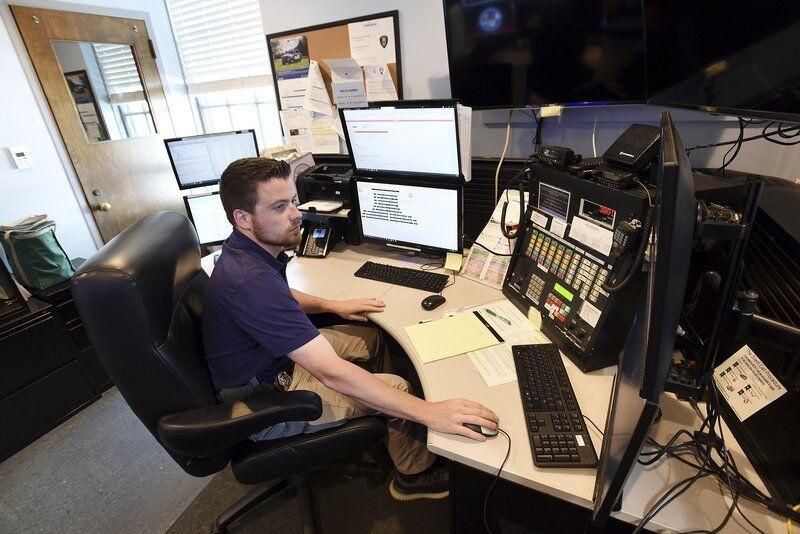
MANCHESTER — A decision on whether the town will move its dispatch operations to the North Shore Regional 911 Center in Middleton is expected to be made in September.
Between now and then, the town hopes to hold a number of public forums for residents to ask questions and voice their opinions on the future of Manchester’s emergency dispatch service.
The first such forum was held Thursday night during a virtual s electmen’s meeting held over Zoom. At its peak, over 70 people tuned in, either online or by phone. Currently a nother forum has yet to be scheduled…

by AllThingsECC.com | Jul 25, 2021 | Comm Center News
CHARLOTTESVILLE, Va. (WVIR) – There are new developments in the 911 outages that affected many parts of central Virginia throughout Thursday, July 22.
The Emergency Communications Center (ECC) – which covers Charlottesville, Albemarle County, and the University of Virginia – says it was notified of the issue around 10 a.m. and had intermittent service until around 5 p.m.
“I’m not aware of any specific detriments, but I do know there were community members having to do different things to get public service assistance,” ECC Executive Director Sonny Saxon said.
ECC worked Thursday to share alternative phone lines for people who could not access the 911 service line. It also encouraged people to text 911…